
On February 17, 2026, American civil rights activist, politician, and minister Jesse Jackson passed away at the age of 84. In his passing, Chicago lost a tireless worker for civil and social rights, but his devotion to care and uplift continues to call new generations to join the fight. In this photo essay, CHM director of education and curatorial affairs Erica Griffin-Fabicon describes Rev. Jackson’s extraordinary life and legacy accompanied by a selection of photographs from our collection that capture his indelible impact on Chicago and beyond.
Civil rights and religious leader and politician Rev. Jesse L. Jackson Sr.’s 60-year commitment to activism and social change began while he was a student at North Carolina Agricultural and Technical State University in the early 1960s. His leadership and organizational skills caught the attention of Rev. Dr. Martin Luther King, Jr. and the Southern Christian Leadership Conference (SCLC). Following his graduation from college in 1964, Rev. Jackson marched with Dr. King and the SCLC from Selma to Montgomery, Alabama, in 1965.
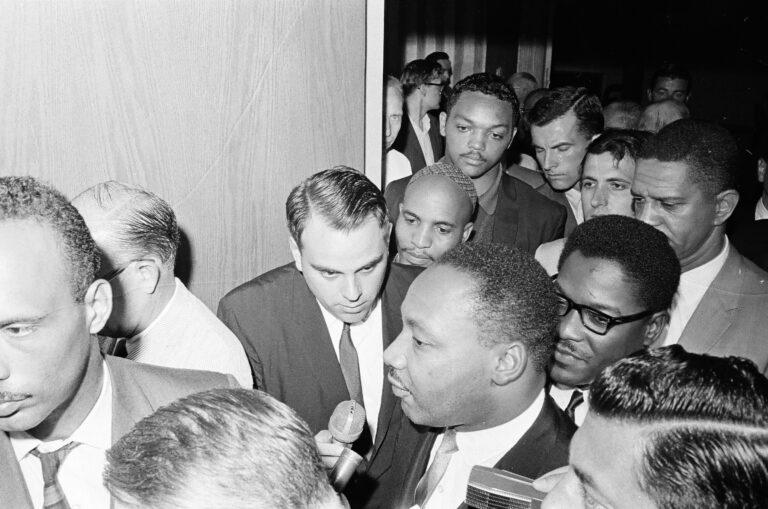
Martin Luther King Jr. speaks to the media during a summit meeting on open occupancy housing with Chicago mayor Richard J. Daley at St. James Cathedral, 65 East Huron Street, Chicago. Jesse Jackson looks on in the center background. August 17, 1966. ST-10104142-0001, Chicago Sun-Times collection, CHM
Rev. Jackson became deeply involved in the Chicago Freedom Movement after moving to Chicago to attend the Chicago Theological Seminary. Jackson had a key role in the efforts to mobilize African American religious leaders to support the Movement’s goal to address the rampant racial and economic injustices plaguing Black Chicago neighborhoods.
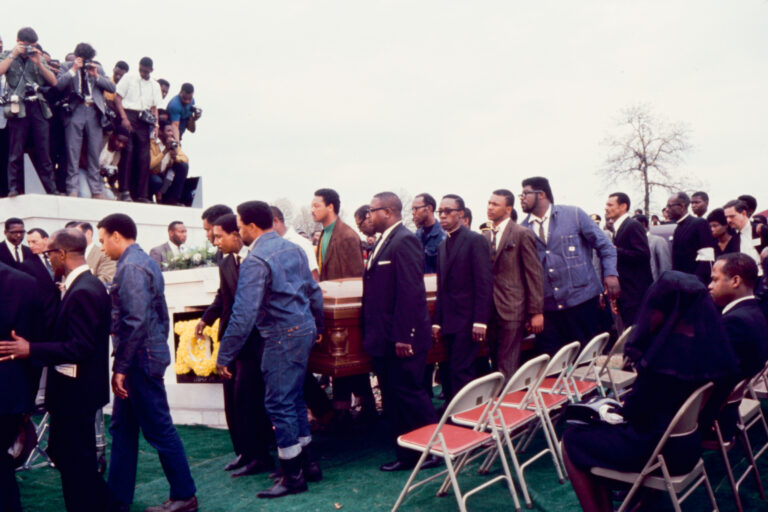
Pallbearers carry the casket of Dr. Martin Luther King Jr. during his burial service in Atlanta, April 9, 1968. Jesse Jackson stands behind the casket in a green shirt and brown blazer. CHM, ICHi-173458; Declan Haun, photographer
Dr. King appointed Jackson as the director of Operation Breadbasket, the economic arm of SCLC. Breadbasket focused on securing employment opportunities for Black people. Under his leadership, Operation Breadbasket targeted grocery stores chains with a large presence in the Black community. Through pickets, protests, and data collection, Breadbasket activists demanded that these companies hire more community members in both entry-level and management positions, provide shelf space for products made by Black-owned businesses, and end the selling of spoiled meat and produce in their stores.
re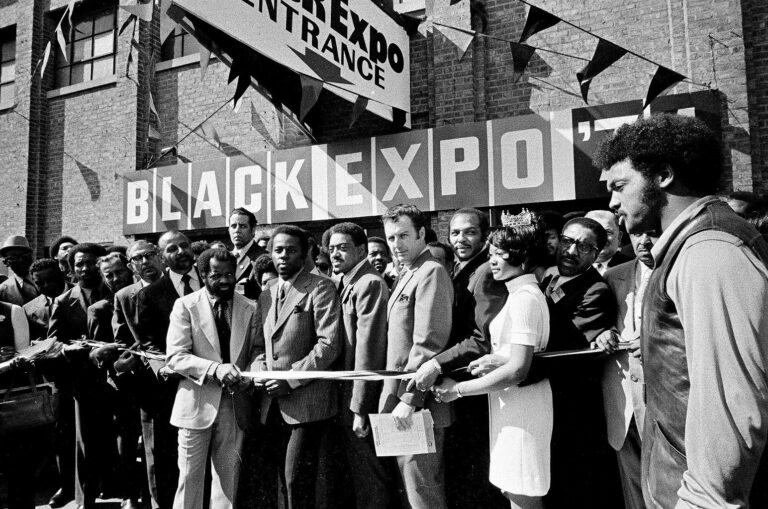
Rev. Jesse Jackson and others officially open the 1971 Black and Minorities Business and Cultural Expo, Chicago, September 29, 1971. ST-19031751-0015, Chicago Sun-Times collection, CHM
The Black Expo was a successful extension of Operation Breadbasket. First held in 1967 in Chicago, the Expo promoted Black excellence. This multi-day event highlighted Black-owned businesses and connected them with large corporations, which would hopefully purchase their products.
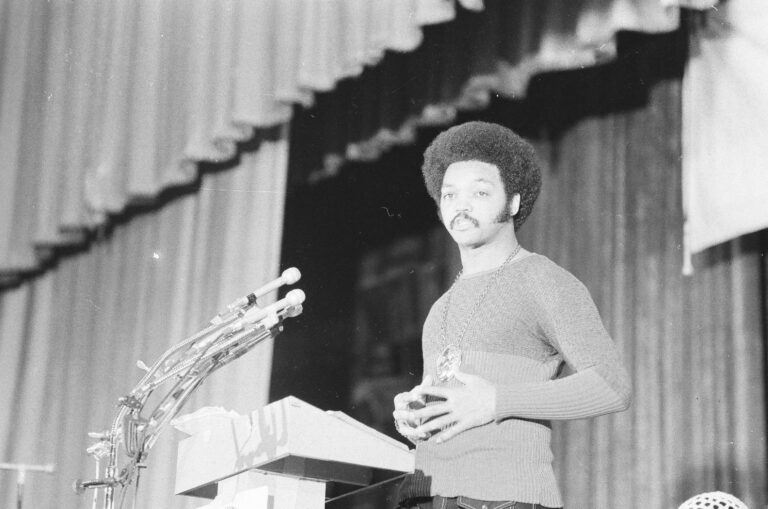
Jesse Jackson addresses an Operation Breadbasket meeting as a guest speaker after being suspended as leader of the organization, 7941 South Halsted Street, Chicago. December 4, 1971. ST-12005694-0005, Chicago Sun-Times collection, CH
Following difficult conversations with SCLC leaders over resource allocation, Rev. Jackson decided to separate himself from the SCLC, resigning from the organization in December 1971. Rev. Jackson named his new organization PUSH, an acronym for People United to Save Humanity (later revised to People United to Serve Humanity).
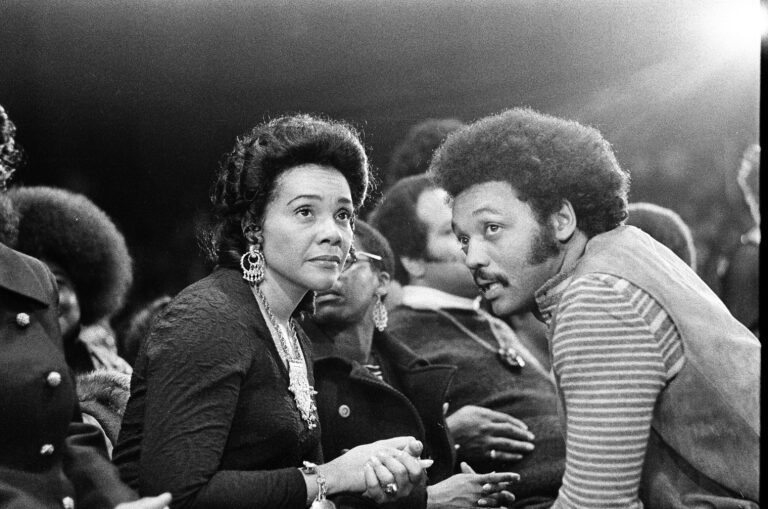
Jesse Jackson speaks with Coretta Scott King at the First National Black Political Convention at West Side High School in Gary, Indiana, March 11, 1972. ST-19031772-0013, Chicago Sun-Times collection, CHM
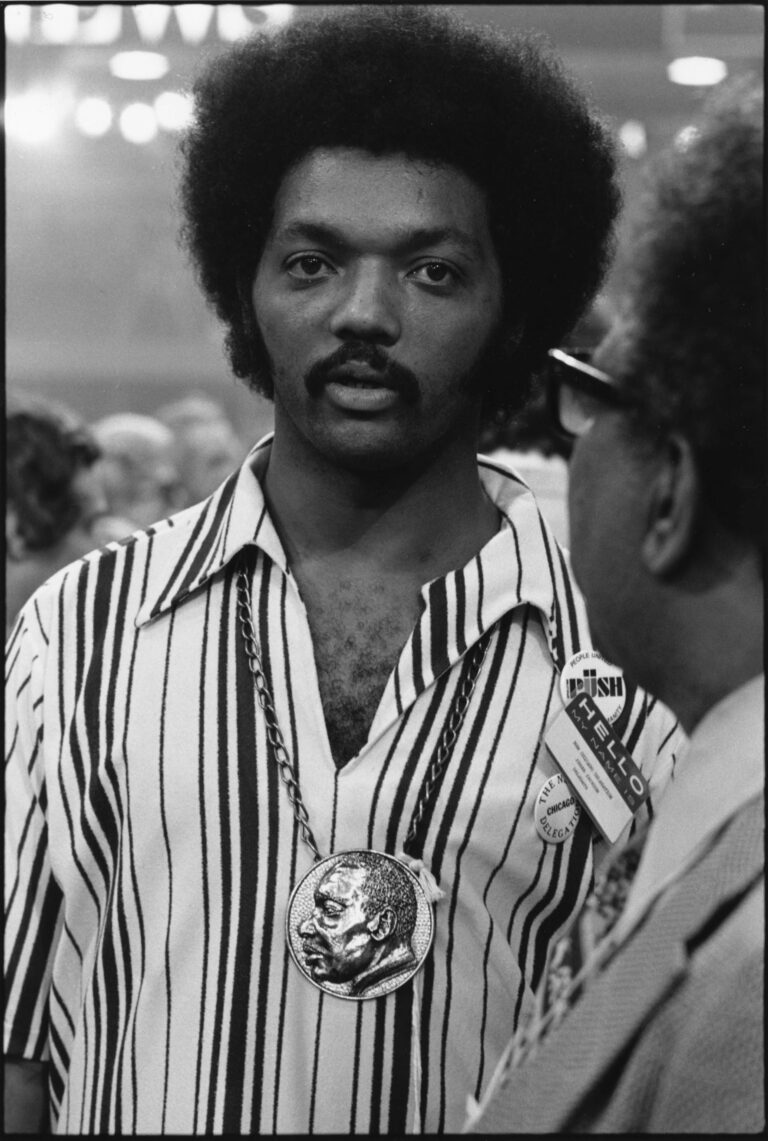
Jesse Jackson at the New Chicago Delegation, Chicago. Jackson is wearing a commemorative Dr. King medallion. At this meeting, Rev. Jackson became part of the New Chicago Delegation, which supported Sen. George McGovern’s candidacy at the 1972 Democratic National Convention. CHM, ICHi-038704; Declan Haun, photographer
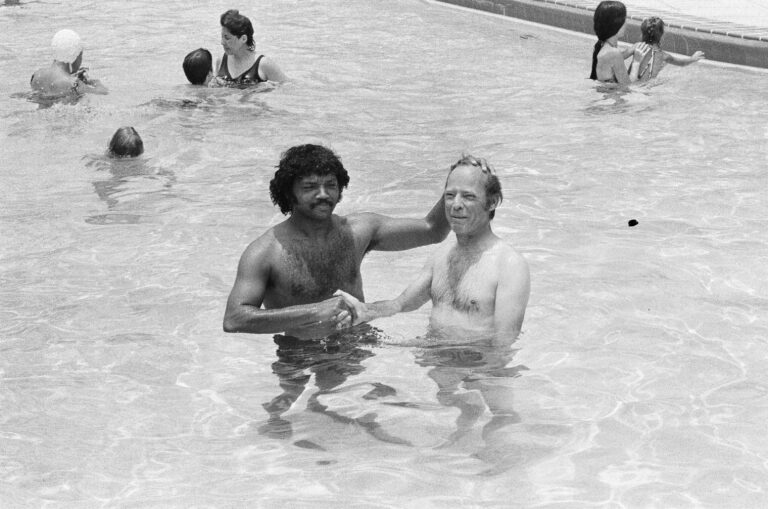
Jesse Jackson relaxes with delegates in a pool after the opening sessions conclude for the 1972 Democratic National Convention, Miami Beach, Florida, July 15, 1972. ST-19033571-0003, Chicago Sun-Times collection, CHM
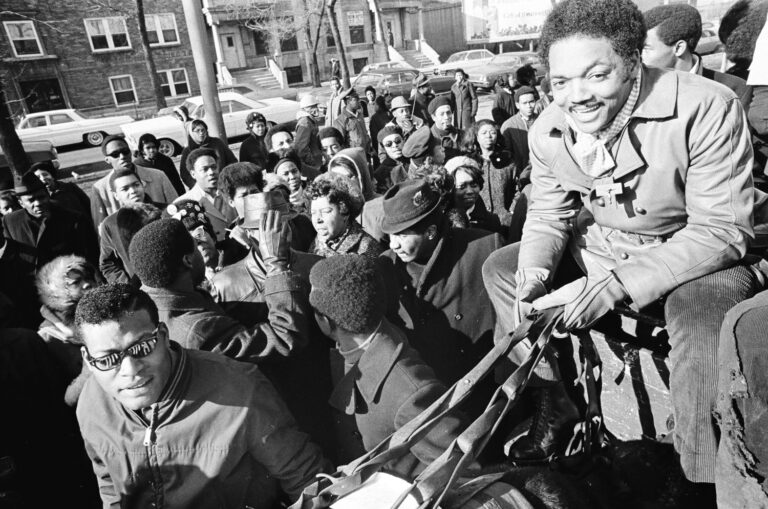
Jesse Jackson participates in the South Side Christmas Parade, Chicago, December 7, 1972. ST-30004480-0035, Chicago Sun-Times collection, CHM
PUSH’s early activities followed the Operation Breadbasket model. All of Breadbasket’s materials, resources, staff, and board members followed Jackson to PUSH. PUSH would address varied issues from housing to education to voting rights for Black people over the following decades.
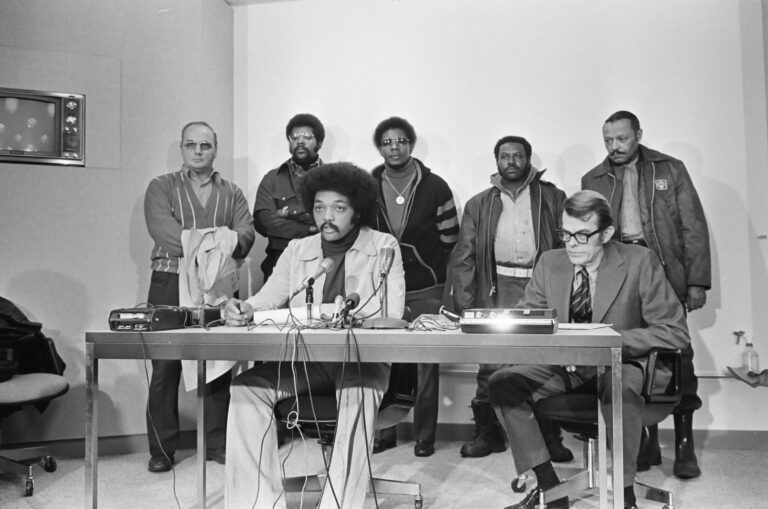
Jesse Jackson discusses gasoline issues at the Standard Oil Building, Chicago, January 2, 1974. Standard Oil agreed to investigate Jackson’s claims that Black gasoline dealers were receiving less gasoline and paying more for it than white dealers. ST-50004976-0037, Chicago Sun-Times collection, CHM
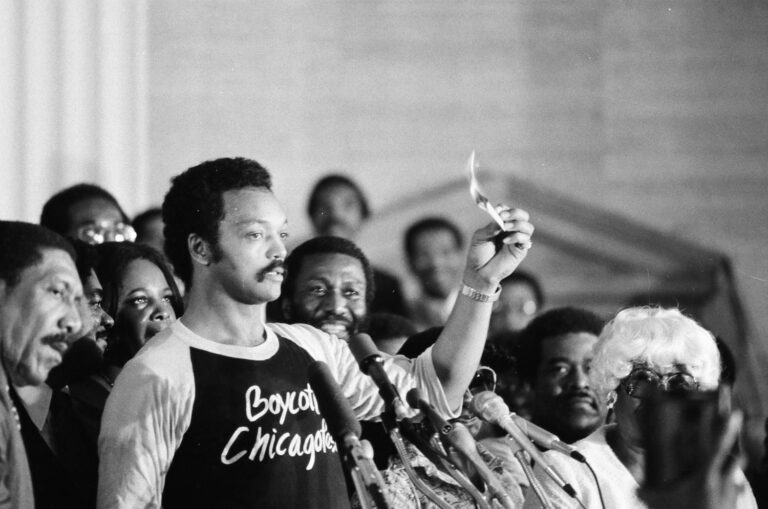
Rev. Jesse Jackson burns a set of Chicagofest tickets in protest of Chicago mayor Jane Byrne’s nomination of three white board members to the Chicago Housing Authority, at Operation PUSH headquarters, 930 East 50th Street, Chicago, July 31, 1982. ST-12001917-0015, Chicago Sun-Times collection, CHM
In 1984, PUSH merged with the National Rainbow Coalition, an outgrowth of Rev. Jackson’s presidential campaign. Rev. Jackson was inspired by the philosophy of Fred Hampton, president of the Illinois Chapter of the Black Panther Party. Hampton’s Rainbow Coalition linked varied marginalized people together to advocate collectively against shared systems of oppression. Rev. Jackson would build on this model, giving voice to varied communities and their concerns for economic and social equality.
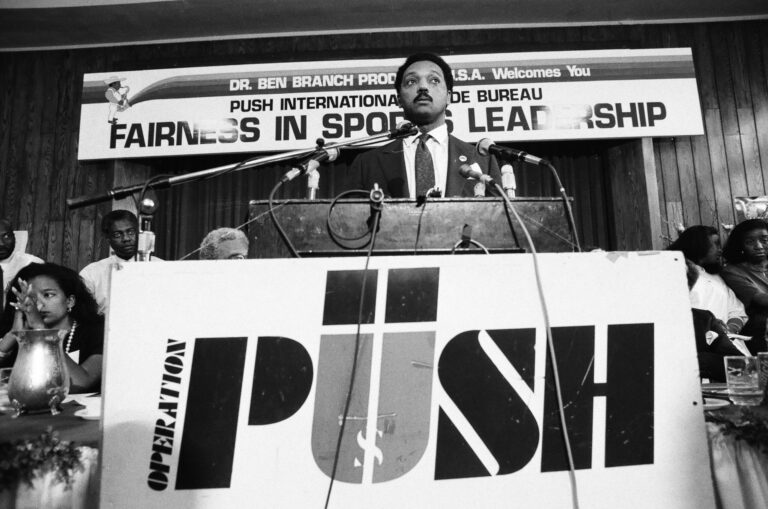
Retired sports stars and Jesse Jackson participate in the ‘Fairness in Sports Leadership’ conference to address need for minorities in coaching and front-office positions in major league sports, at Operation PUSH headquarters, 930 East 50th Street, Chicago, May 29, 1987. ST-12002798-0062, Chicago Sun-Times collection, CHM
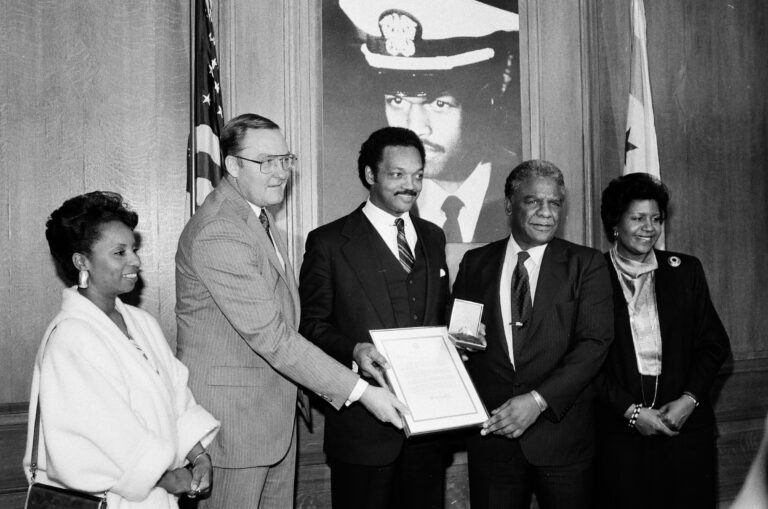
Jesse Jackson receives a commemorative gift from Mayor Harold Washington after returning to Chicago from freeing a captured Navy airman from Syria, January 10, 1984. ST-30002916-0001, Chicago Sun-Times collection, CHM
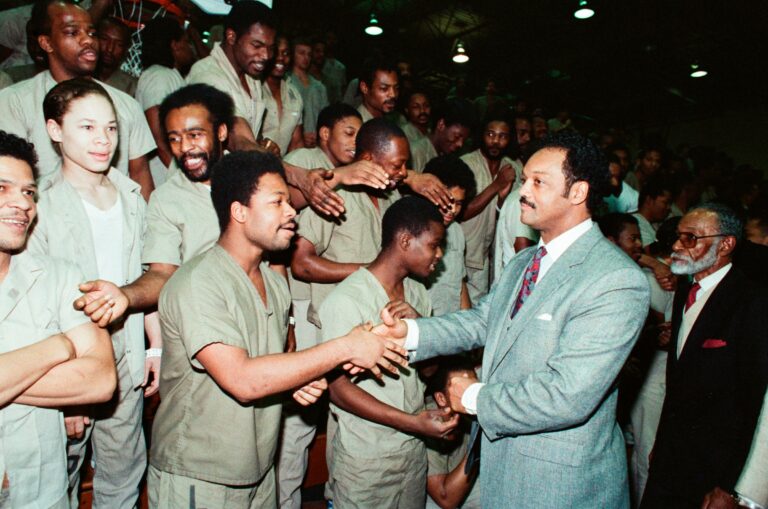
Jesse Jackson speaks to imprisoned people during his annual Christmas visit to the Cook County Jail, sponsored by Operation PUSH, Chicago, December 25, 1989. ST-30002138-0012, Chicago Sun-Times collection, CHM
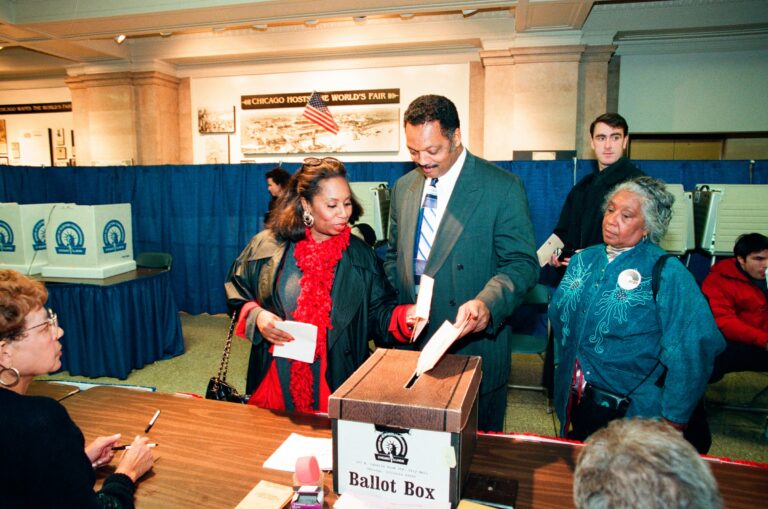
Rev. Jesse Jackson and his wife Jacqueline Jackson vote by absentee ballot, Chicago, November 1, 1996. ST-12001577-0024, Chicago Sun-Times collection, CHM
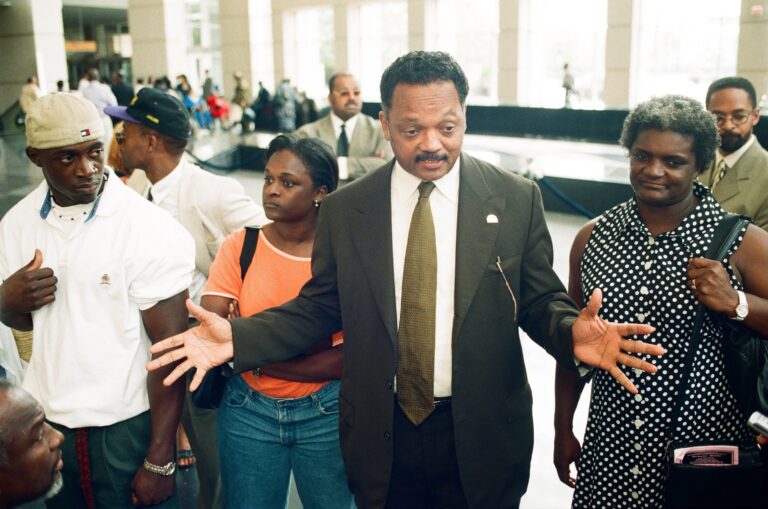
Rev. Jesse Jackson and other activist leaders participate in a Rainbow/PUSH organization conference on Africa at McCormick Place, 2301 South King Drive, Chicago, July 29, 2000. ST-10002320-0142, Chicago Sun-Times collection, CHM
Rev. Jackson would continue to advocate for varied causes centering collaboration and advancement across marginalized groups. Rev. Jackson’s words, actions, and steadfast devotion to a safe and well society stands to remind us that we are all “somebody,” and if we “keep hope alive,” the fight for justice continues for another day.
To explore Rev. Jackson’s contributions to the city of Chicago and the nation, visit the online resources below.