
Last year, Kulpati was among a group of more than a dozen friends who designed a monthlong, citywide scavenger hunt called PURSUIT. Another one of that game’s creators, Riley Walz, has pulled off a number of other stunts, including an app that tracked San Francisco Municipal Transit Agency workers ticketing parked cars in real time and another that chronicled the music passersby listened to on an undisclosed street in the Mission District.
Kulpati said the growth of these projects reflects a trend in the tech industry.
“I’d say most programmers now spend most of their time prompting AI to help them write code,” he told KQED. “One way to look at that is, you can make your same old boring stuff faster. Another way to look at it is: ‘What is stuff you’ve never made before that now you can make?’”
Designing Facade Mash would have been a weeklong endeavor, at least, if Kulpati had to code it himself. Instead, he said, he built most of it in one night.
“There’s definitely this pocket of, I’d say, creative technologists who are using this stuff and applying it in interesting ways,” he said. “It’s very S.F.”
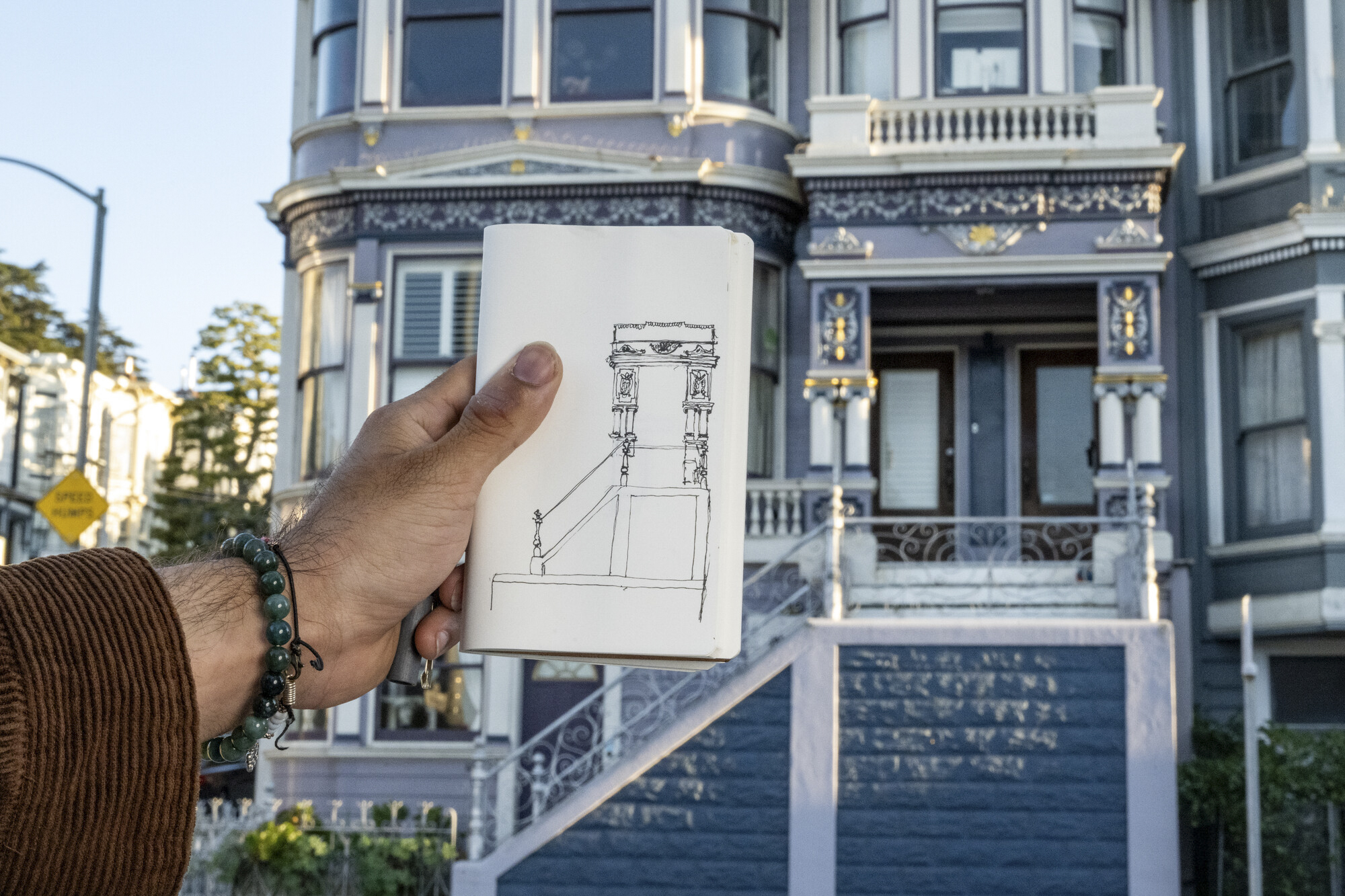
Kulpati described the process of ranking buildings as a kind of collaboration between humans and AI. He used the computer to do an initial order before inviting people to play “this or that,” so they wouldn’t be comparing an empty lot, per se, to a Sea Cliff waterfront home.
Still, it’s been evident that computer systems don’t have the same taste as the human eye.
“Civic Center was the best,” after the AI ranking round, he told KQED. “If you look at the leaderboard now, it’s more cozy.”
The website asks users a simple question: Which building looks better? Below the prompt are two photos of addresses somewhere in the city. Pick one, and two fresh facades appear.