

Our podcast, The Missing Exhibition: Building Aquí en Chicago, is a finalist for “Best Podcast” at the Chicago Headline Club’s Peter Lisagor Awards! In this blog post, The Missing Exhibition co-creators Elena Gonzales, Curator of Civic Engagement & Social Justice at CHM, and Jesse Betend, producer at Rivet360, write about how the podcast is a celebration of Latine history in Chicago that weaves the immediate with the often overlooked.
In our contemporary media landscape, we’ve become accustomed to sound bites, vanishing social media posts, and myriad competing, cacophonic demands on our attention. Long-form journalism feels like a thing of the past, when quaint radio dramas held us rapt on our sofas. It has been a great honor and pleasure to bring the Chicago History Museum’s first podcast into being at this particular time, when we crave a moment to sink into stories without distraction. The Missing Exhibition allows listeners to delve more deeply into just a few of the many histories within the exhibition, Aquí en Chicago.
Like the exhibition, the podcast started with high school students from Instituto Justice and Leadership Academy in Pilsen challenging CHM to better reflect their communities’ history.
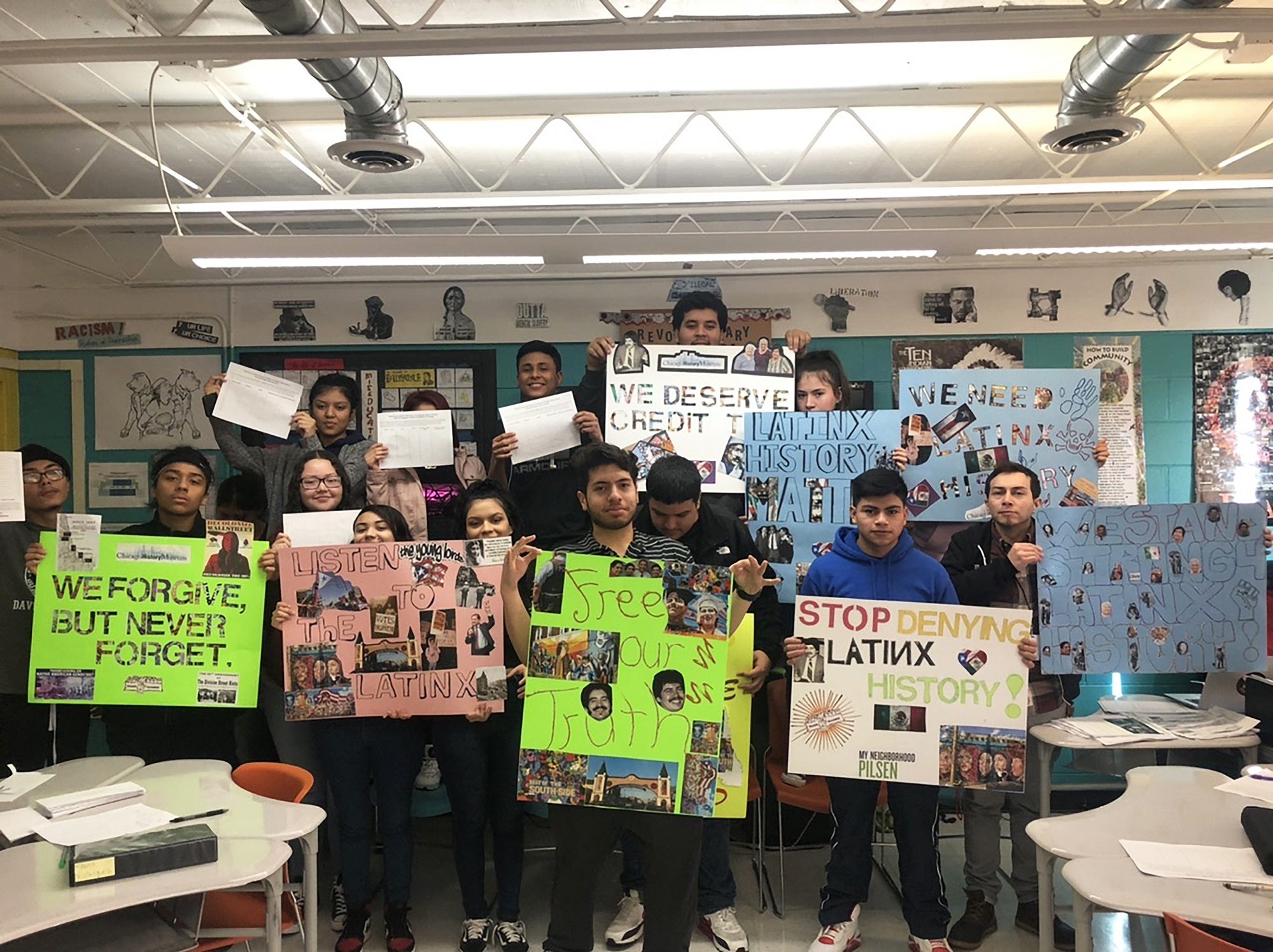
Students at Instituto Justice and Leadership Academy with their signs protesting CHM’s lack of Latine content in its exhibitions, 2019. Photograph courtesy of Anton Miglietta
Our initial goal was to document the protest and find ways to extend the presence of Latine histories beyond the year that the exhibition would be open. These stories are crucial to our understanding of Chicago, whatever our individual backgrounds may be, and we could not allow them to feel like a flash in the pan. The series touches institutions, power structures, and public narratives, and balances a broad context with specific and detailed moments both fragile and unfolding.
In addition, we’ve been able to take up topics that arose too close to opening to share in the exhibition. We opened Aquí in October 2025 amidst Operation Midway Blitz, a hate-fueled, racist mass-deportation campaign focused specifically, at that time, on Latine folks in and around Chicago. At the same time, the podcast was already in production.
We chose to lean into this opportunity for truth telling and documentation of the present in conversation with the past. We pieced together histories that were fragmented, but that echoed the violence and specific actions of our contemporary moment. In cases where traditional records failed—for example, researching people who never returned after mass deportation campaigns such as so-called “Operation Wetback”—absence became part of the story itself.
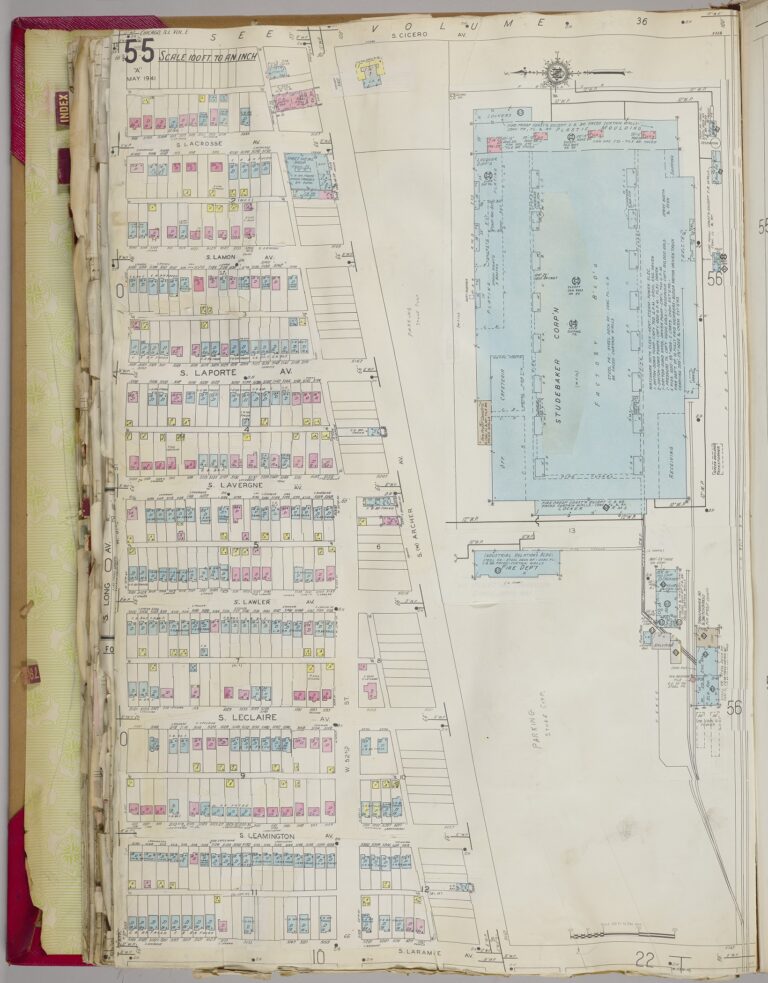
Map showing the Studebaker factory on S. Archer Ave. between S. Cicero Ave. and S. Laramie Ave. Plate 55 (1959), Insurance maps of Chicago, Illinois, vol. E, Ink on paper, 1925, Sanborn Map Co., United States. CHM, ICHi-189067
Parts of the story emerged through the corridos of Jesus “Chuy” Negrete, the beloved activist, songwriter, and scholar whose music immortalized everyday Chicagoans and 500 years of Chicano history alike. Corridos are traditional Mexican ballads—story-songs Negrete described as a “musical newspaper”—that preserve what official archives often don’t. A single line from the lyrics of Negrete’s ballad for Rudy Lozano, written for the funeral of the activist-turned-politician who was murdered in his home at the height of his career, revealed suspicions the press and law enforcement had largely ignored.
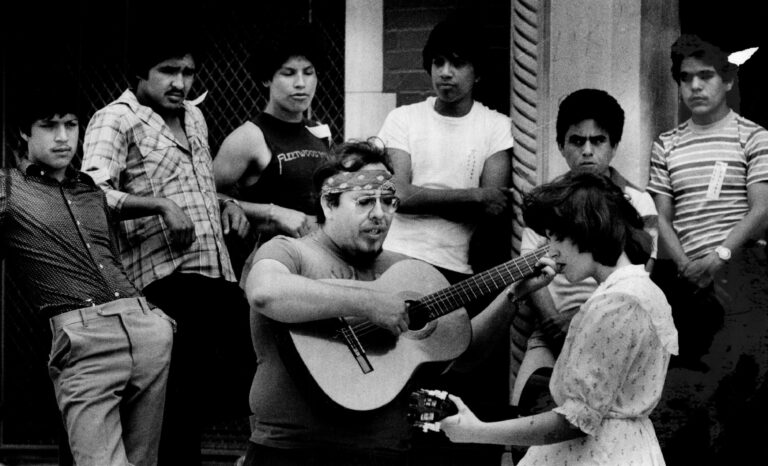
Jesús “Chuy” Negrete (center) and Teresita de la Torre (right foreground) play in homage to Rudy Lozano outside Farragut High School, Chicago, c. 1983. STM-036822153, Al Seib/Chicago Sun-Times
We began to find evidence of disappearing histories all around us. The story of a community leader’s legacy obscured by press coverage of his alleged killer’s trial led us to former Chicago Reader reporter Gary Rivlin, whose work suggests what the community believed all along: that Lozano’s death was political, part of a broader pattern of power and retaliation that the official story never fully confronted.
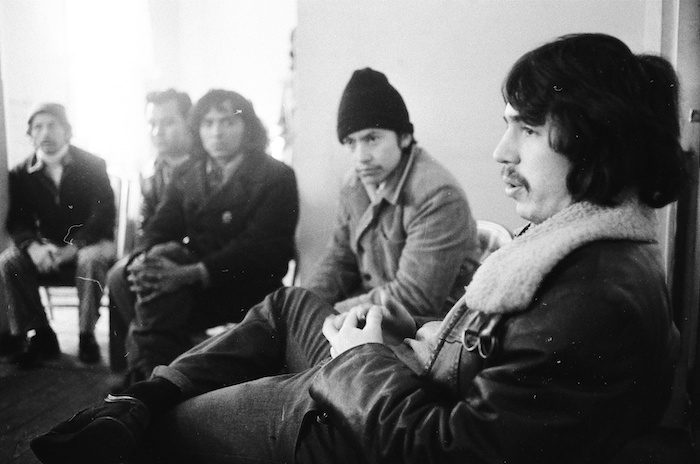
Rudy Lozano (right) at a meeting of CASA (the Centro de Accion Social Autonomo, or the Center for Autonomous Social Action), Chicago, February 12, 1975. ST-40001425-0011, Chicago Sun-Times collection, CHM
These themes are especially present in the second episode, “Sound & Faith: Echoes of Defiance in a Sanctuary City,” which traces the sanctuary movement at a time when that history is being aggressively weaponized to justify mass deportations. From Adriana Portillo-Bartow, a Guatemalan mother fleeing military violence in the 1980s, to Elvira Arellano, whose protest inside a Humboldt Park church after 9/11 reignited a national movement, we felt it more pressing than ever to document the reasons Chicago became the second city in the nation to offer refuge to immigrants fleeing violence in their home countries.
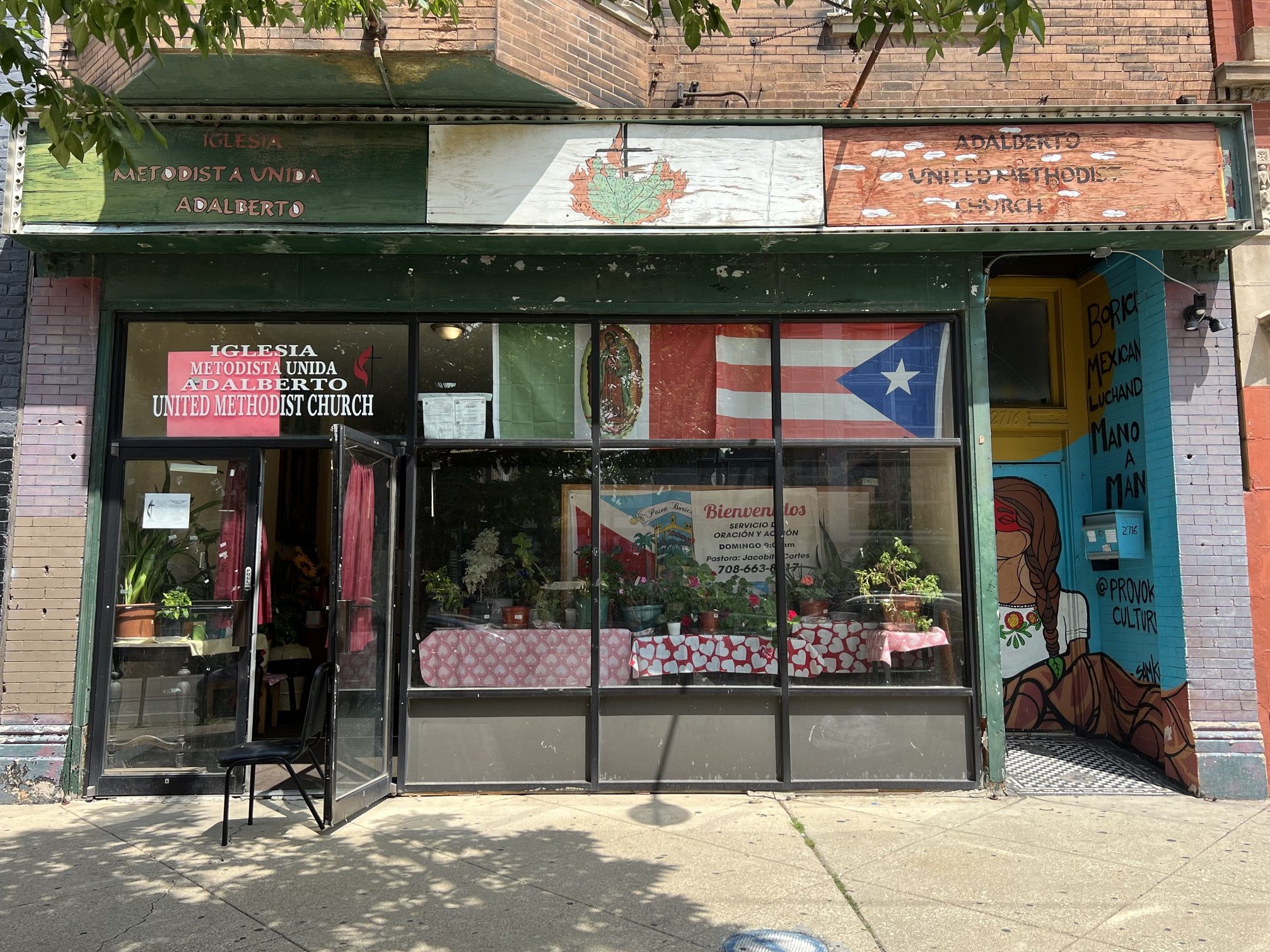
Adalberto Memorial United Methodist Church, where Elvira Arellano took sanctuary, in Chicago’s West Town community area, 2022. Photograph by Rebekah Coffman
The Missing Exhibition is an invitation to listen differently, to consider whose histories are told, who gets to tell them, and what it takes to change that. Join us in close listening as well as close looking within the exhibition Aquí en Chicago through November 8, 2026.