

FLUSHING, N.Y. (RNS) — Temple bells echoed through the sanctuary as priests chanted Sanskrit prayers before black granite deities draped in silk and fresh flowers. Barefoot worshippers carrying coconuts, bananas and jasmine garlands moved from shrine to shrine as families from across the country gathered to mark the anniversary of the Hindu Temple Society of North America’s consecration, a tradition observed each year on the same date the U.S. celebrates its founding.
The date is fitting. The Hindu Temple Society of North America, officially called Šri Mahã Vallabha Ganapati Devasthãnamri, is the second-oldest traditional Hindu temple founded by Indian immigrants in the United States. It opened its doors on July 4, 1977, after years of fundraising and planning by Indian immigrants who had settled in the New York metropolitan area. Sri Venkateswara Temple in Pennsylvania, the first traditional Hindu temple founded by Indian immigrants, was consecrated only a few weeks earlier on June 8, 1977.
After passage of the Immigration and Nationality Act of 1965 abolished the national-origins quota system, there was a surge in immigration from Asia, including India. Many who arrived entered the U.S. through employment-based visas, particularly in management, business and science fields. The new Indian immigrants wanted a place of worship and created the Hindu Temple Society of North America, which purchased the site of a former Russian Orthodox church in Flushing, Queens.
Now, nearly 50 years later, the Hindu Temple Society of North America counts more than 20,000 devotees on its mailing list, and there are an estimated 1,000 Hindu temples, including traditional temples like this Queens temple, spread out over 45 states. Šri Mahã Vallabha Ganapati Devasthãnam, nonetheless, still draws worshippers from across the United States. Last Saturday (July 4), as the U.S. marked its 250th anniversary, more than 100 people came to Flushing to celebrate the temple’s anniversary.
Worshippers filled the temple from early morning, as early as 7:30 a.m., lining up with trays of fruit, coconuts and flowers as priests performed special pujas, a Hindu ceremony involving prayers and offerings to the deities, throughout the day. Families gathered in front of the temple’s shrines before making their way downstairs to share a meal in the bustling canteen, where volunteers poured steaming sambar over plates of idli and crisp dosas. Some had come for breakfast. Others were on their way upstairs for morning worship. Many were there for both.
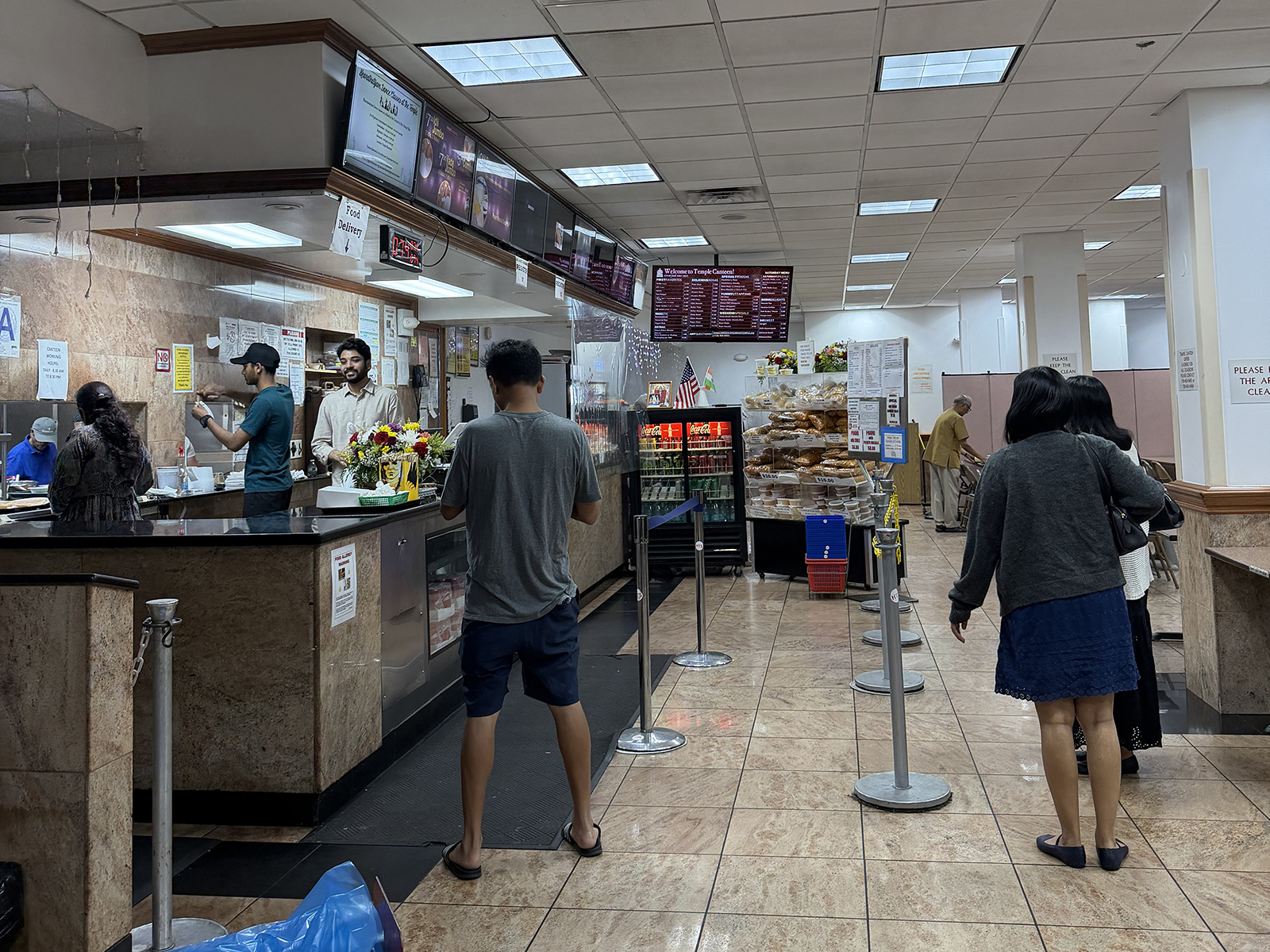
Opened in 1993, the canteen has become one of New York City’s best-known destinations for South Indian vegetarian cuisine, drawing Hindi worshippers alongside neighborhood residents, students and tourists, who often visit the temple after stopping for a meal.
Beyond daily worship, the temple hosts religious festivals, cultural celebrations and educational programs throughout the year. Its Ganeša Pãtašãla, a religious and cultural school established in 1998, offers instruction in Hindu religion, Indian languages, classical music and Bharatanatyam dance, giving children and young adults an opportunity to learn the traditions and practices of Hinduism alongside their cultural heritage.
But last weekend, many who visited were drawn to Lord Ganesha, the elephant-headed Hindu deity revered as a remover of obstacles. The temple, dedicated to Lord Ganesha, has always attracted devotees seeking blessings before milestones — starting a new job, welcoming a child, beginning a new chapter. Throughout the afternoon, worshippers streamed through the temple carrying bags of prasadam after offering prayers.
Some had traveled only a few subways stops; others had driven or flown in from hundreds of miles away.


For Jai Yaram, a married 34-year-old who immigrated from India to the United States several years ago, the temple has become a familiar part of his new life. A frequent visitor, he said the temple helped him adjust to the U.S. by giving him a spiritual connection to India. “It gives me a lot of peace,” Yaram said, noting worshippers do pujas — a traditional prayer — every day. “It brings the values from India here. I hope this temple stands forever, because I came here as an immigrant, and gradually I’m progressing.”
Another visitor, Sai Yash, 34, from Wichita, Kansas, spoke of that same pull toward Ganesha.
“I came from Wichita, Kansas, after hearing that this is one of the finest temples,” Yash said. “Whenever we begin something, a new job, the first prayer we do is to Ganesha. That’s why we came to this temple.”
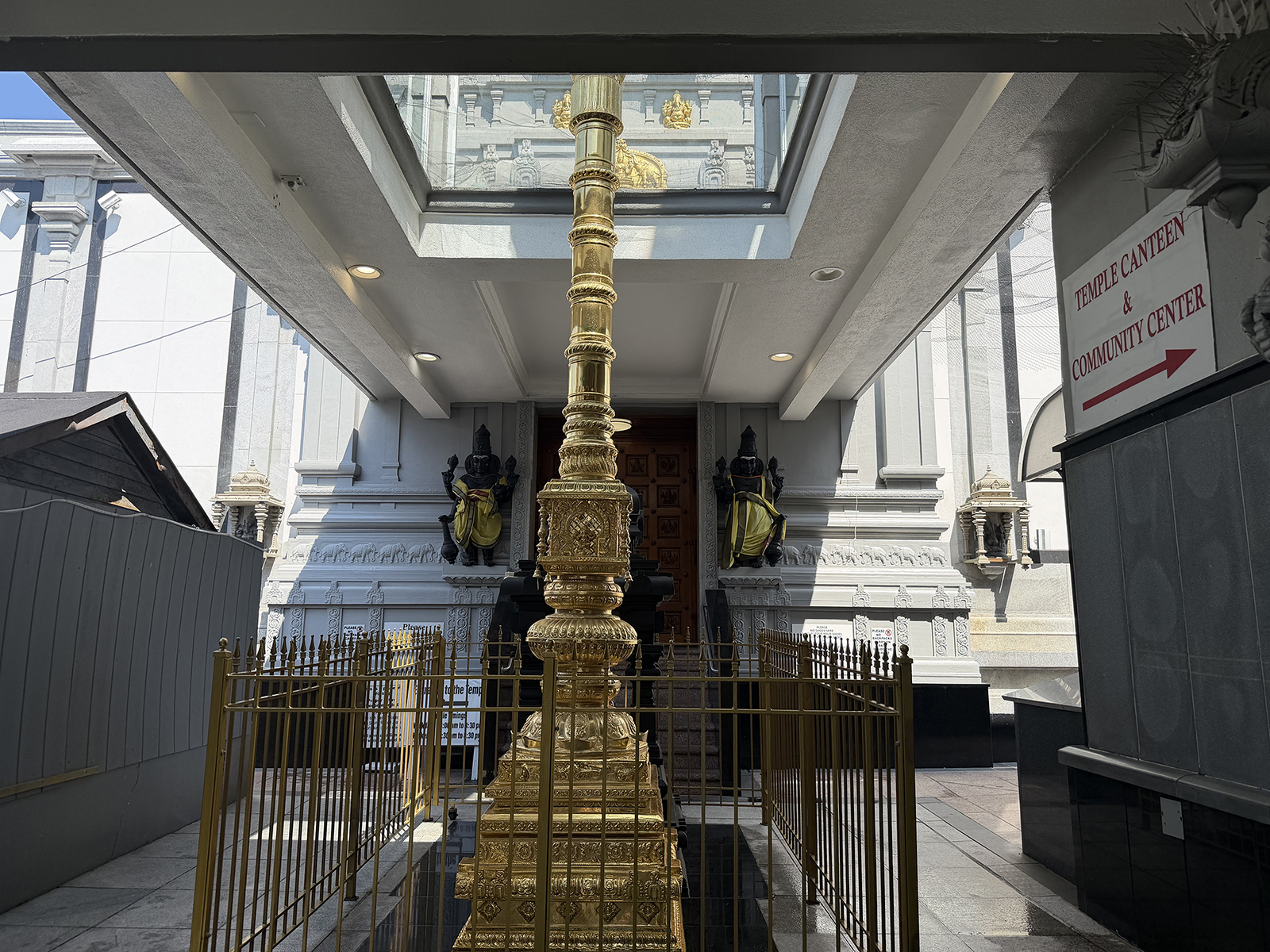
Others made the journey to celebrate family milestones. Dharti Adhia traveled from Cincinnati with her husband and their 11-month-old child, making the Ganesh Temple one of the family’s first stops during their July 4 visit to New York. The visit fulfilled a promise she had made to herself years earlier. “The first time I came here, I remember thinking that one day I’d bring my baby here,” she said. “This place has always felt very special.”