
As part of our Aquí en Chicago exhibition, which traces the lives of Latino/a/e communities in Chicago, our blog post series by guest authors highlights countries of Latin American heritage. Bolivian Independence Day is celebrated on August 6, the anniversary of the signing of the Declaration of Independence in 1825. In this blog post, CHM curatorial volunteer Nez Castro writes a brief history about the Bolivian community in Chicago.
The earliest documentation of a connection between Bolivians and Chicago is in 1893, when a group of Aymara-speaking men was scheduled to appear at the World’s Columbian Exposition. Among them was José Santos Mamani, a man known for his height. Tragically, they never arrived in Chicago and were abandoned in the pouring Pennsylvania rain, where Mamani contracted an illness and passed away after they walked all the way from there to New York.
The first major wave of Bolivian immigration to the United States was in the early 1950s when people sought refuge from the intense reforms of the Revolutionary Nationalist Movement government. Many in this first wave came from privileged backgrounds.
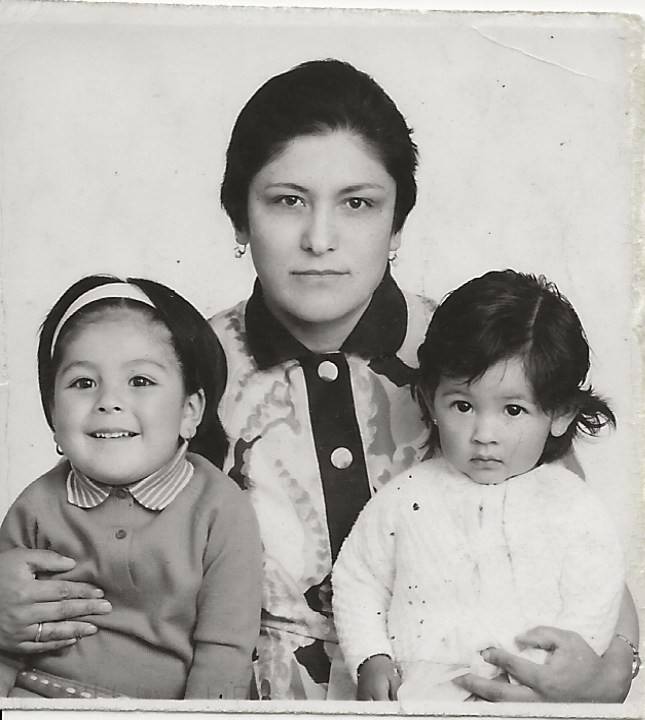
Amalia Rioja holding her daughters Ligia Rioja (left) and Amalia S. Rioja (right), the author’s mother, upon arrival in the United States, January 1971. Courtesy of Nez Castro
Another wave of immigration happened in the 1960s and 1970s because US intervention in Bolivia created political instability when regime changes became normalized. In the 1960s, a Chicago doctor and a Chicago-born Catholic priest in Bolivia established a medical exchange program that allowed Bolivian doctors to go to Chicago for specialty training. This program had two goals: reduce communist influence in Bolivian medicine and bring medical expertise to Bolivia. Oak Park Hospital, now Rush Oak Park, was the first to participate in this exchange, before the program expanded to other hospitals in the region as more doctors arrived.
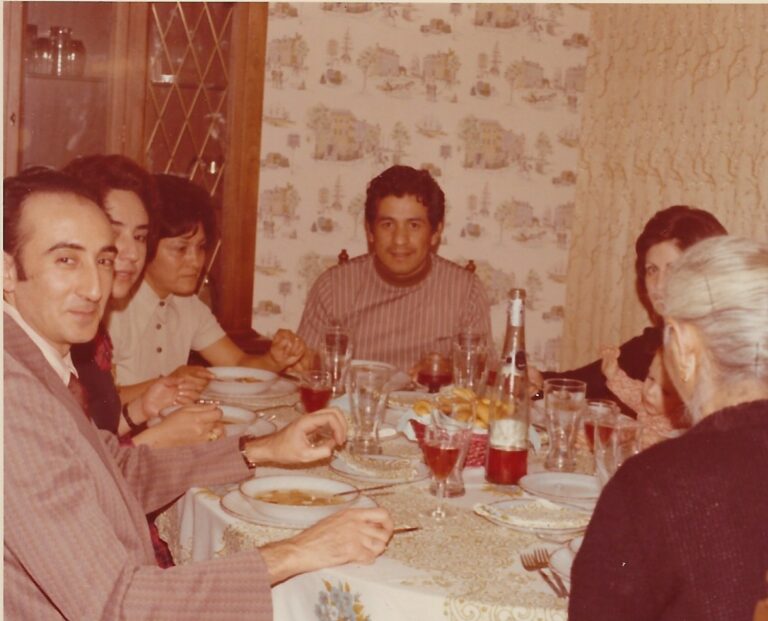
Dr. Edmundo Rioja (center) hosting a dinner party with other Bolivian doctors at his house in Oak Lawn, c. 1972. Courtesy of Nez Castro
The Vietnam War also increased the need for physicians. In 1976, doctors from the program founded the Bolivian American Medical Society (BAMS) to send medical expertise and education back to Bolivia while maintaining a sense of community here in Chicago. Most of these doctors stayed and chose to bring their families to start new lives in Chicago, including my grandfather Edmundo Rioja, an OB/GYN who delivered thousands of babies, and Dr. Hugo Muriel, the first Latine appointed as Chicago Health Commissioner.
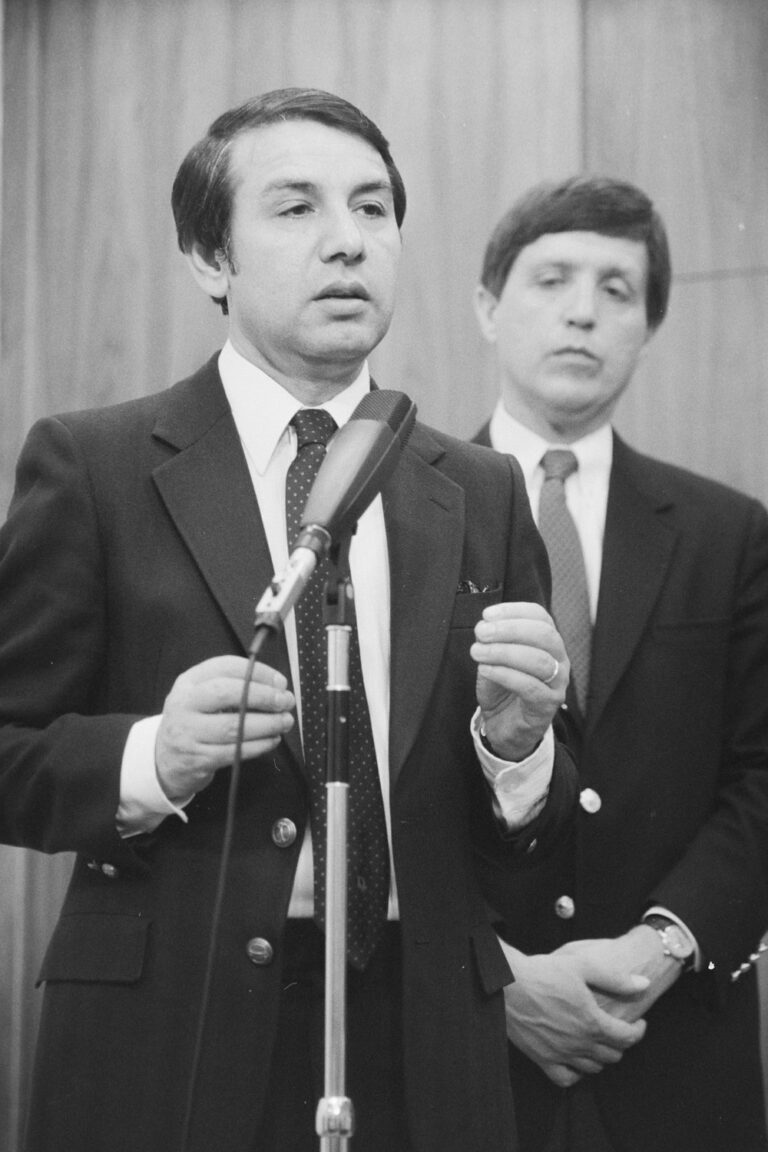
At City Hall, Dr. Hugo Muriel (left foreground) announces emergency steps to be taken to address the Tylenol tampering and murders, Chicago, October 1, 1982. Chicago Police Department superintendent Richard Brzeczek stands on the right. ST-18001932_0047, Chicago Sun-Times Collection, CHM
Chicago mayor Jane Byrne appointed Dr. Muriel in 1979, where he served the city diligently. During his tenure, Chicago experienced multiple public health crises, including the Tylenol Murders and the AIDS epidemic. Dr. Muriel recognized the importance of starting an AIDS task force before the illness could reach the level of destruction seen in cities such as New York and San Francisco. He later served as president of BAMS from 1997 to 1998 and passed away on July 27, 2014.
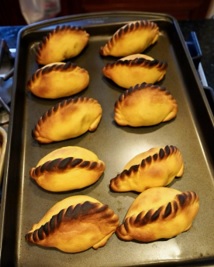
Freshly baked beef salteñas from Alice’s Corner Bolivian Cuisine, Aurora, Illinois, November 2024. Courtesy of Nez Castro
Chicago has one of the largest Bolivian communities in the United States. However, Bolivians are among the smallest Latine groups in the Chicago area, which means Bolivian food can be hard to find. Alice’s Corner Bolivian Cuisine in west suburban Aurora serves salteñas, an iconic Bolivian empanada with meat, raisins, eggs, olives, and other spices, creating a savory and slightly sweet pocket of deliciousness. There are other vendors throughout Chicagoland who sell salteñas from their own homes, but they are harder to find.
Outside of food, Renacer Boliviano is a community organization founded in 1989 that strives to provide essential assistance while also promoting and preserving Bolivian culture. Renacer Boliviano hosts Bolivian Summerfest to celebrate Bolivian Independence Day with food, traditional dances, and communityand maintains strong ties between the United States and Bolivia.