

Heat forces staff to shuffle counseling to less private spaces, disrupts group therapy and when inmates are forced inside during heat alerts, they sometimes lose out on programs and recreation time to stay in even hotter cells.
One prisoner at the California Rehabilitation Center in Norco declined to take an antipsychotic medication urged by his psychiatrist because he didn’t want to lose his maintenance job over heat concerns.
In their housing units, there’s little inmates can do other than take showers and scoop ice when officers provide it. Concrete, uninsulated cells can be as much as 21 degrees hotter than common areas, the department has noted.
Inmates may keep a personal fan in their cells; it’s available for $27 from the commissary. An inmate with no family support would have to work a minimum-wage prison job for about 4 weeks to afford one, estimates Bharat Venkat, a UCLA anthropologist who has researched the effects of heat on incarcerated people.
Lawrence Cox, an advocate with Legal Services for Prisoners with Children, spent years incarcerated in Calipatria State Prison, in the Imperial County desert and California State Prison Solano, in Vacaville. He and his cellmate would wet their bedsheets in the sink to try to keep cool, but with little ventilation, the cell only became more humid, and he developed heat rashes that he said left lasting marks on his skin.
“I have never sweated so much, continuously, all day, just simply by sitting there,” he said. “There’s really no reprieve.”
The heat protocol’s success depends on who’s on shift. Over the years, the monitor has found inconsistent record-keeping and compliance, according to thousands of pages of court records reviewed by CalMatters.
Though some facilities are testing digital temperature use, most prison staff maintain outdoor and indoor records on paper, in handwritten logs. A department spokesperson said supervisors are required to verify those records daily.
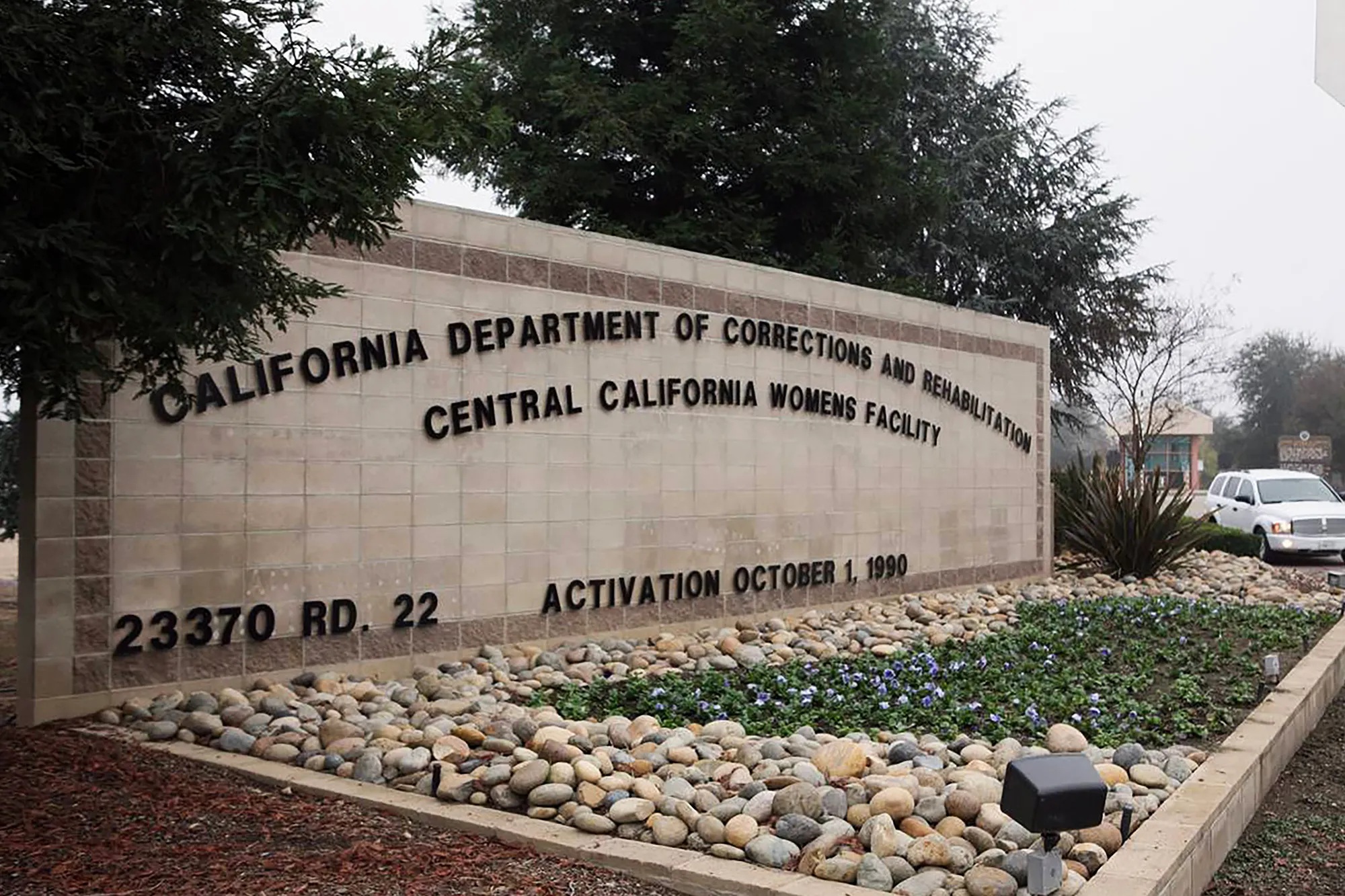
Reviewing logs from the Central California Women’s Facility in Madera County obtained through a public records request, CalMatters found days in which prison staff did not record any indoor temperatures. Two days in 2022 the same indoor temperature was recorded at one of the facility’s housing units every three hours for the entire day, in the same handwriting.
A death at California’s largest women’s prison
Every summer, incarcerated women at the Chowchilla prison flood the phone lines of community advocacy groups and attorneys’ offices, raising alarms about hot conditions. About 2,000 women are incarcerated across 15 housing units at the facility, which opened in 1990.
Every summer from 2020 through 2024, Chowchilla saw at least seven days that reached or surpassed 105 degrees; last summer set a record at 28 days.
Adrienne Boulware, who had been incarcerated there for about a decade by 2024, told her family each summer that the prison’s evaporative cooling units weren’t working, said her daughter Michaela Nelson.
“We were usually worried about her every summer,” Nelson said.
Even driving through the Central Valley to visit Boulware felt “treacherous” because of the heat, Nelson said. The family had helped her buy a fan for her cell, and she took showers to cool off, but in phone calls to her daughters in the summer of 2024, Boulware described the prison as “hot as hell.”
Boulware raised Nelson and three siblings in Sacramento. She was serving a 15 years-to-life sentence for second-degree murder in the 2011 beating death of a man she and another woman argued with in an abandoned car wash in north Sacramento. Nelson said her mother had been steadily repaying her debt to society, taking classes and running a Bible study. In recent years Boulware had started going to parole hearings, so her family was hoping for her release. Nelson, a home care worker in Georgia, planned to move back to California.
Like much of the state, Chowchilla was three days into a searing two-week heat wave during last year’s long Independence Day weekend when Boulware, 47, collapsed.
On July 4, when temperatures were as high as 109 degrees outside, the swamp cooler in Boulware’s building was “blowing warm air but was fixed the same day,” CDCR attorney Melissa Bentz wrote in an email later included in court records. Staff placed coolers of ice water and “large industrial floor fans” in the housing units.
On July 5, outside temperatures reached 108. A lieutenant at the prison told the Madera County Sheriff’s Office that Boulware, who court records say was prescribed the mood stabilizer lithium, was “outside in the yard most of the day,” according to a coroner’s report. After they returned inside, dorm-mates found Boulware on the floor of the shower.
Officers were unsure if she was having a seizure or overdose. She was given four rounds of Narcan and taken to a hospital in Merced, where she died early the next morning.
Amid a public outcry in the days that followed, department spokespeople downplayed the role of heat in Boulware’s death, telling reporters it “appears to be the result of an ongoing medical condition and not heat-related.”
A toxicology report showed fentanyl was found in her blood. The Madera County coroner this year listed the cause of death as undetermined.
Experts say it can often be hard to identify heat as a cause in deaths and medical events, especially when people have other health conditions.
Advocates and Boulware’s family believe her death was preventable. Records show the department itself suspected heat from the beginning.
In prison staff’s first phone call to Boulware’s family before she was taken to the hospital on July 5, Nelson said, they told her sister she had suffered a heat stroke. In an email to plaintiffs’ attorneys and the court monitor a few days after the death, a prison medical provider wrote that the causes of death were listed as loss of consciousness, seizures, “heat stroke and possible overdose.” The email was included in court records.
An alarmed plaintiffs’ attorney, Steven Fama, wrote to the court monitor on July 8 asking for an investigation. Citing Boulware’s prison medical records, Fama noted her body temperature was 41.5 degrees Celsius when she arrived at the hospital — 106.7 degrees Fahrenheit, eight degrees higher than the normal human body temperature.
He also raised more questions: Why, he wrote, was an inmate who was prescribed the heat-sensitive medication lithium “outside all day” during a triple-digit heat wave?
Nelson said her family is still waiting for an answer. They also haven’t received her mother’s belongings — years of letters, photographs, everything the family bought her from the prison commissary and her mother’s Bible. Asked by CalMatters for comment, CDCR said it is following department procedures for returning Boulware’s belongings. Officials declined to comment on her death, deferring to the coroner’s report.
“It’s hard to not know,” Nelson said. “It’s always better to know than to just be wondering, wondering if she suffered, and how things could have been different.”
Increasing pressure on the state
Seven months after Boulware died, in February of this year, court-appointed prison monitor Matthew Lopes wrote that her death was a “tragic reminder of the very real harm that can result from failing to properly monitor and treat patients on heat-sensitive medication.”
But corrections department attorneys urged him not to include that in his report evaluating CDCR’s heat protocol. In court records, staff attorney Nick Weber called it “charged language,” noting that, as of this spring, the coroner had not yet documented an official cause of death.
Since Boulware’s death a year ago, advocates have used the incident to demand that CDCR do more to protect incarcerated people.
Earlier this year, activists pleaded with the Cal/OSHA standards board to adopt a promised new workplace standard for state prisons. They argued that many prison inmates work in the facilities, whether in kitchens, facility maintenance, or as part of state programs that place inmates in jobs with private contractors.
Any new rule would require a drafting and public hearings process which can take years. Spokespeople for both the department and the Cal/OSHA board said they are in “discussions” about a rule, but no public process has begun.
Cox’s group, Legal Services for Prisoners with Children, sponsored a bill this year that would have forced the state to lower temperatures in all the prisons and require digitized, live temperature monitoring. The bill sailed through state Assembly committees and didn’t garner any official opposition.
But with the corrections department estimating it would cost between $10 billion and $20 billion to make the changes, author Assemblymember Celeste Rodriguez said she knew it would be a tough sell amid a budget deficit. Rodriguez, a Democrat from Chino, agreed to hold it and revisit it next year.
She said she’s encouraged by the pilot program the department is starting, but wants to keep the legislation alive so officials don’t lose urgency to address the heat.
“Managing litigation costs is a factor when we consider infrastructure projects,” she said of the potential cost of installing air conditioning across prisons.
Meanwhile, in a class action federal court case on medical care in California prisons, plaintiffs representing virtually every prisoner in the state have sought to bring heat issues before a judge.
They’ve pointed to a case in Texas in which a judge ruled in March that the lack of systemwide air conditioning there violates constitutional protections against cruel and unusual punishment.
The department has objected to the comparison. Unlike Texas, attorneys for the CDCR wrote in June, California prisons have experienced “very few sentinel events (such as deaths) among its patient population directly related to extreme heat.”
But in California, U.S. District Judge Jon S. Tigar has expressed interest in the issue, and directed the department to provide the plaintiffs data on the matter.
“I want to say this very clearly, this is a medical issue,” he said in a June conference with attorneys on all sides. “This is a big issue, that’s only going to get bigger with the passage of time.”
This article was originally published on CalMatters and was republished under the Creative Commons Attribution-NonCommercial-NoDerivatives license.