

Independent writer Larry Kubin documented a fast-growing police network of license plate cameras and drones.
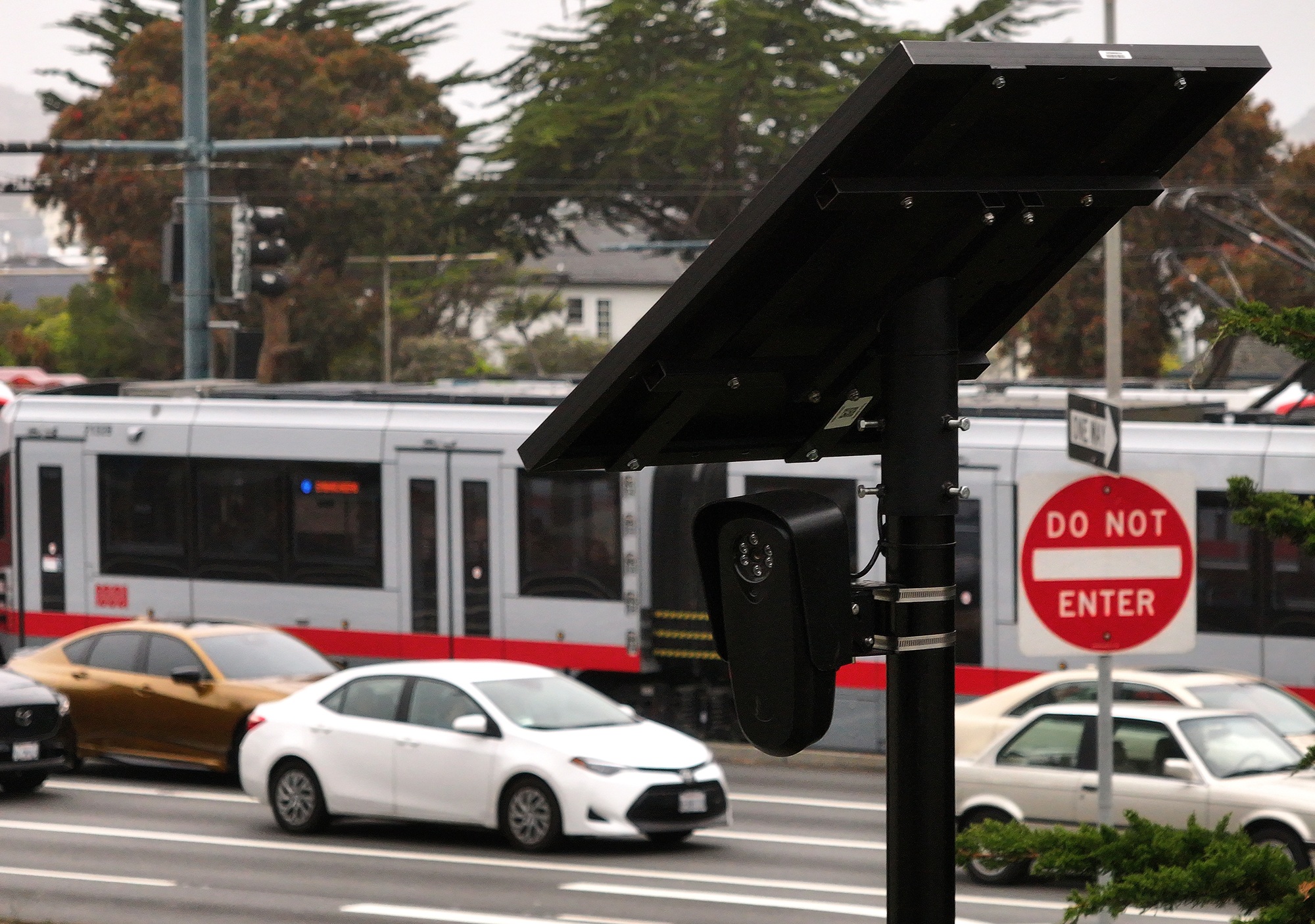
In an aerial view, an automated license plate reader is seen mounted on a pole on June 13, 2024, in San Francisco, California. Independent writer Larry Kubin of “The Fogline” toured the city to find a wide network of surveillance, including Flock Safety cameras. (Justin Sullivan/Getty Images)
“It’s just where trends are heading, and thinking about where to draw the line on what makes people safe versus where it starts to get a little invasive,” Kubin said.
Kubin’s research included scrutiny of the around 400 Flock Safety automated license plate readers that SFPD uses. Police Chief Derrick Lew said last week that out-of-state and federal law enforcement agencies had “improperly” accessed the data, after the Northern California Regional Intelligence Center queried the system hundreds of times.
The incident prompted SFPD to stop sharing Flock data with NCRIC and another agency, the Western States Information Network.
It wasn’t the first of the city’s problems with Flock. In 2025, an investigation by The San Francisco Standard revealed that SFPD had allowed out-of-state agencies to search its system 1.6 million times, a possible violation of state law. Some SFPD personnel also appeared to make searches on behalf of federal agencies.
Bay Area cities Santa Cruz, Mountain View, El Cerrito and the town of Los Altos Hills have canceled Flock contracts over similar concerns surrounding improper data sharing, after each city discovered that their own data had been searched in similar ways. Santa Clara County also iced the company out, and Berkeley council members last month approved a contract extension, but not an expansion.
Flock’s attention in the media, plus a 2019 look at Seattle’s surveillance infrastructure, was part of Kubin’s inspiration for the tour.
“I wanted to look more into that because my initial reaction was, like, ‘Oh, reading a license plate, that’s not so bad,’” Kubin said.
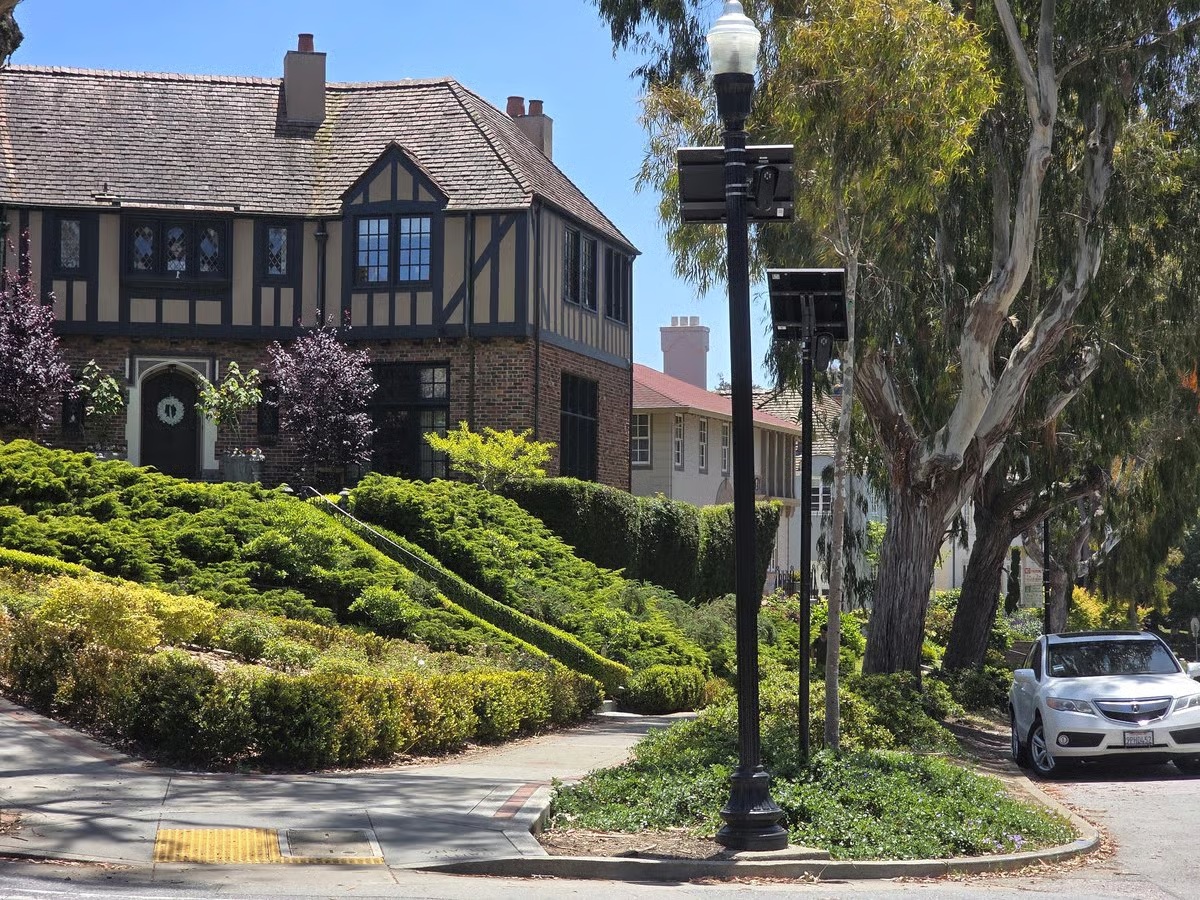
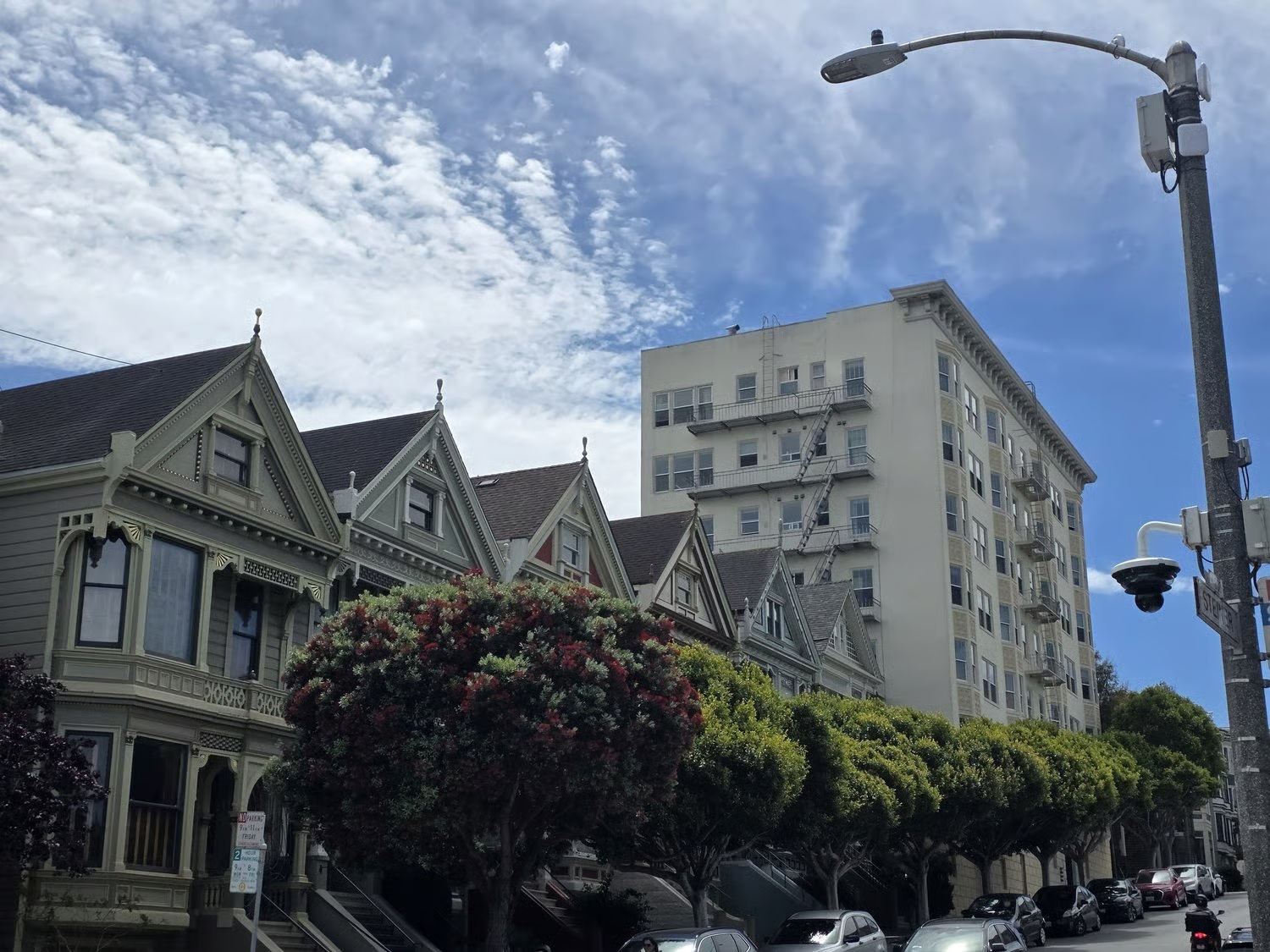
But then he started spotting cameras in “postcard views” of the city and places where people relax. He said it feels like a much different world than the one he grew up in.
“We shouldn’t have to need this much technology,” Kubin said. “We shouldn’t need a police surveillance technology inventory that’s continuing to expand.”
Kubin partly blamed the city’s voter-approved Proposition E. The 2024 ballot measure gave SFPD the green light to roll out new surveillance technology for a full year without an official policy.
“I’m just picturing where we are now and whether it can become like a sci-fi TV show, right?” Kubin said. Kubin said that with the “new powers of things like Proposition E, the checks and balances are a bit looser.”
Proponents of the measure have defended it, with a former spokesperson for the Yes on E campaign saying officers are “highly trained and should be trusted to make smart decisions” regarding the use of drones in high-speed chases.
SFPD’s surveillance network has increased in recent years, opening its fully operational Real Time Investigation Center at its headquarters last year. Mayor Daniel Lurie touted it as an important resource in his efforts to keep the city safe and clean.
The center houses a central hub that synthesizes real-time data from Flock cameras, drones and other public safety cameras. As of its reopening, the center helped make at least 800 arrests, according to ABC7.
But the San Francisco-based Electronic Frontier Foundation is a critic of the center and its origin story.
EFF said that these centers, which other cities like San José also have, are “basically control rooms that pull together all feeds from a vast warrantless digital dragnet.”
SFPD’s center was funded partly through Proposition E, with later additional backing from crypto billionaire and Ripple CEO Chris Larsen. Larsen, through Ripple and his nonprofit San Francisco Police Community Foundation, gifted $9.4 million to the new headquarters.
Larsen’s support was another source of inspiration for Kubin’s deep dive into surveillance. He said that, while Larsen’s “crypto billionaire” title was not enough to upset him, his name had come up a lot in funding for increasing police technology.
Kubin said that the introduction of each surveillance tool in isolation — Flock automated license plate reader cameras, drones, ShotSpotter technology and so on — might’ve made sense at the time for safety. But he worries that it will soon evolve into something else.
“The fact that all those different modalities are coming together into this Real-Time Investigation Center, the whole of that is now greater than the sum of its parts,” Kubin said.