
A federal judge sentenced the CEO and founder of Done Global, a Bay Area-based digital health company, to 72 months in prison for fraudulently distributing stimulants via her telehealth company.
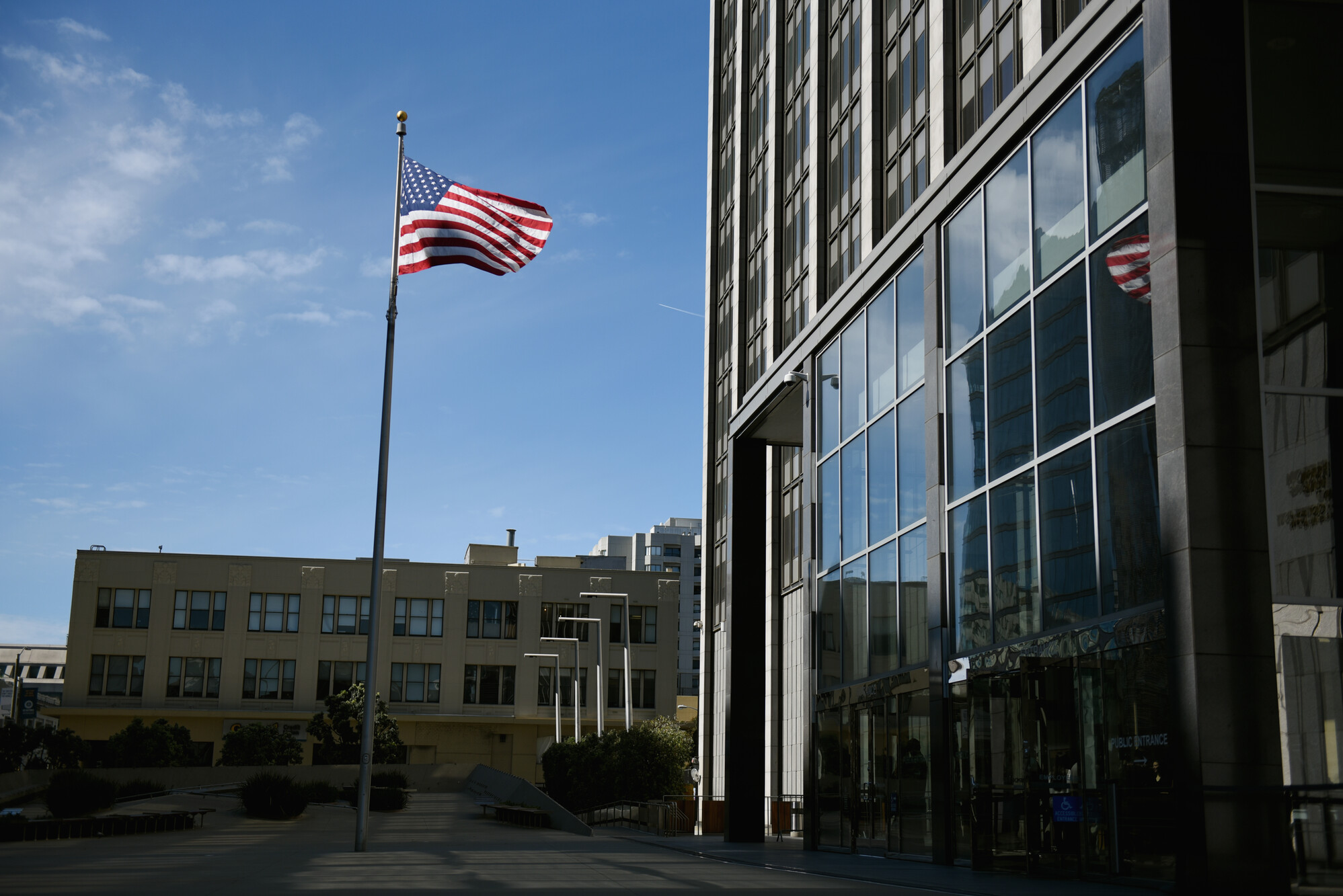
The Phillip Burton Federal Building and United States Court House in San Francisco, California, on March 6, 2018. Court documents allege that the scheme arranged for the prescription of more than 40 million pills.
(Lauren Hanussak/KQED)
He, who came to the U.S. from China 14 years ago, told the court tearfully that she had wanted to contribute and make a positive impact.
Brody, 70, was given a shorter two-year sentence, followed by three years of supervised release. His lawyer, Roberto Escobar, said he planned to appeal.
Prior to his sentencing, he said he was remorseful for his actions and asked to be sentenced to home confinement. His defense counsel said he had spent three decades providing mental-health care to underserved communities in San Francisco.
“I was faced with a challenging situational operation, and I chose poorly,” he told Breyer. “I relied too heavily on my own judgment. At the very moment when outside input would have made a crucial difference, I failed to engage others. I also owe an apology to the patients and staff of Done.”
Both will be fined $1 million, in addition to restitution to the families of victims.
The pair spearheaded the online mental health treatment venture to provide easy access to Adderall, Vyvanse and other stimulants. The Department of Justice alleged that they took advantage of eased restrictions on prescribing controlled substances without in-person consultations amid the COVID-19 pandemic.
“The defendants allegedly preyed on Americans and put profits over patients by exploiting telemedicine rules that facilitated access to medications during the unprecedented COVID-19 public health emergency,” Anne Milgram, then-administrator of the Drug Enforcement Administration, said in a statement after their arrests.
Since the beginning of the pandemic, the company arranged for the prescription of more than 40 million pills, according to court documents.
“Instead of properly addressing medical needs, the defendants allegedly made millions of dollars by pushing addictive medications,” Milgram said.
According to the company’s now-defunct website, Brody co-founded Done Global in 2019, calling it a “passion project” to help friends and coworkers in need of mental-health care navigate a complex system.
The startup promoted a quick and easy process to become a monthly subscriber: members completed a one-minute assessment, followed by a telehealth appointment with a licensed clinician before paying the $79 monthly fee for “worry-free refills” and ongoing care.
In 2022, major pharmacies stopped filling prescriptions from prescribers at Done, and another online mental health company, Cerebral — which also came under federal investigation — after reports that some healthcare professionals felt pressured into diagnoses. In 2024, Cerebral agreed to pay more than $3.6 million “for engaging in practices that encouraged the unauthorized distribution of controlled substances” as part of a non-prosecution agreement with the U.S. Attorney’s Office in the Eastern District of New York.
Done faced similar scrutiny, and according to court documents, paid medical professionals to diagnose members with attention-deficit hyperactivity disorder and write them prescriptions for Adderall and other stimulants, even when people did not qualify for the medications.
He and Brody, among others at the company, created policies including limiting the information available to prescribers, instructing them to issue Adderall and other stimulants even if the Done member did not qualify, and limiting appointments to under 30 minutes.
The Department of Justice alleged that they falsely represented their prescription policies, claiming that they were able to keep appointments short with a screening process designed to weed out people who were unlikely to qualify for a diagnosis — a factor that could have diverted Adderall from people who needed it amid a nationwide shortage that began in 2022.
The DOJ also claimed that the company continued to operate even after He and Brody became aware that information had been posted on social media instructing people to use Done to gain easy access to stimulants — and that some members had overdosed and died.
On Tuesday, Kimberly Atwood told Breyer and the court that her brother Michael had died after he was misdiagnosed by a Done provider and relapsed.
“I have a mistrust of doctors now,” she said.
KQED’s Azul Dahlstrom-Eckman contributed to this report.