
RALEIGH, N.C. (RNS) — For nearly a decade, activists with the group Democracy Out Loud have been protesting at the North Carolina General Assembly, holding vigils for people who died in government custody, writing letters to their state and federal representatives and building coalitions of like-minded activists.
They admit: They haven’t been successful in pushing back the tide of what they see as growing authoritarianism across the nation.
But these battle-scarred social justice veterans, many with a long history of involvement in social and political causes stretching back decades, have been able to build one thing that has lasted: a growing community of people who care for each other and practice a form of spiritual grounding rooted in meditation.
The group’s founder and lead organizer Karen Ziegler, 72, an ordained minister, retired nurse practitioner and a devoted Buddhist, prioritizes regular check-ins and attention to people’s well-being.
“What we discovered, being on the street week after week after week, was that we weren’t making a dent in the things we were protesting,” Ziegler said. “But what we were doing was finding the others who felt the same and building community around the things that we wanted.”
Since its inception in 2017, Democracy Out Loud has doubled in size, with nearly 80 people from across the state attending its Tuesday Zoom meeting to plan and strategize their actions. On Thursdays, Ziegler leads a guided Buddhist meditation, also on Zoom, attended by about 20 people. Some 1,500 people read Ziegler’s weekly Substack (the latest titled “Keep Hope Alive”).
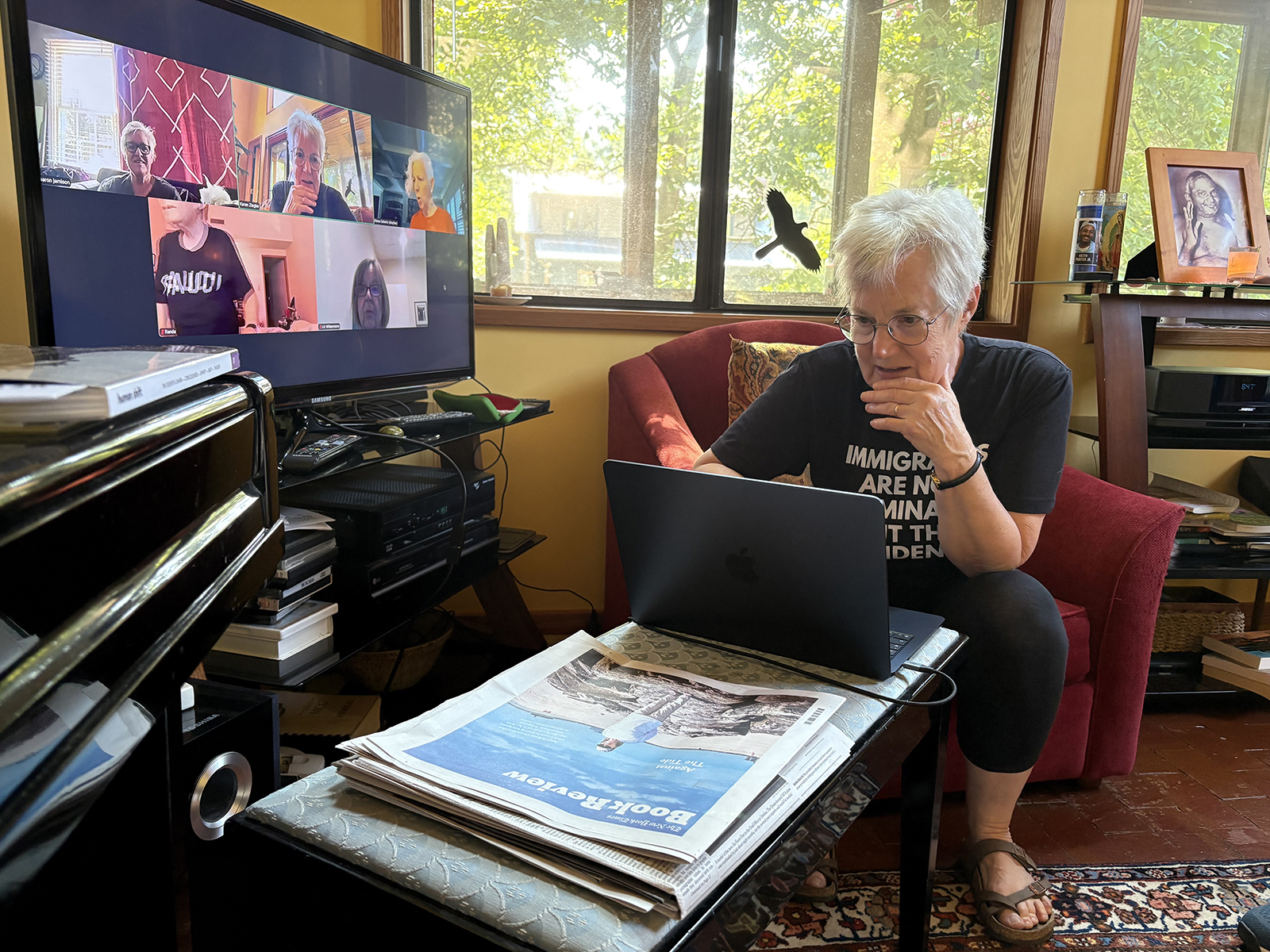
The group is mostly made up of retirees who have the time and the passion for activism but who also appreciate the attention to self-care.
Lucy Lewis, a lifelong activist who was one of the organizers at the 1979 Greensboro Massacre in which Klansmen and American Nazis shot and killed five demonstrators, members of the Communist Workers’ Party, has been a stalwart participant.
“In this political climate, things move quickly, and it can be overwhelming,” said Lewis, 74. “To take just one hour to stop and to slow down — it gives me a chance to sort of recenter: Why am I doing this? How can I continue to be in the struggle as things get hard? To be in community with other people who share that commitment, but also want to be part of a meditation practice, is really quite a gift.”
Last month, Democracy Out Loud, along with other groups, gathered in downtown Raleigh to memorialize more than 60 people who have died in ICE custody this past year. They held up posters with photos of the dead and read aloud their names, shouting “presente,” the Spanish word for “present.”
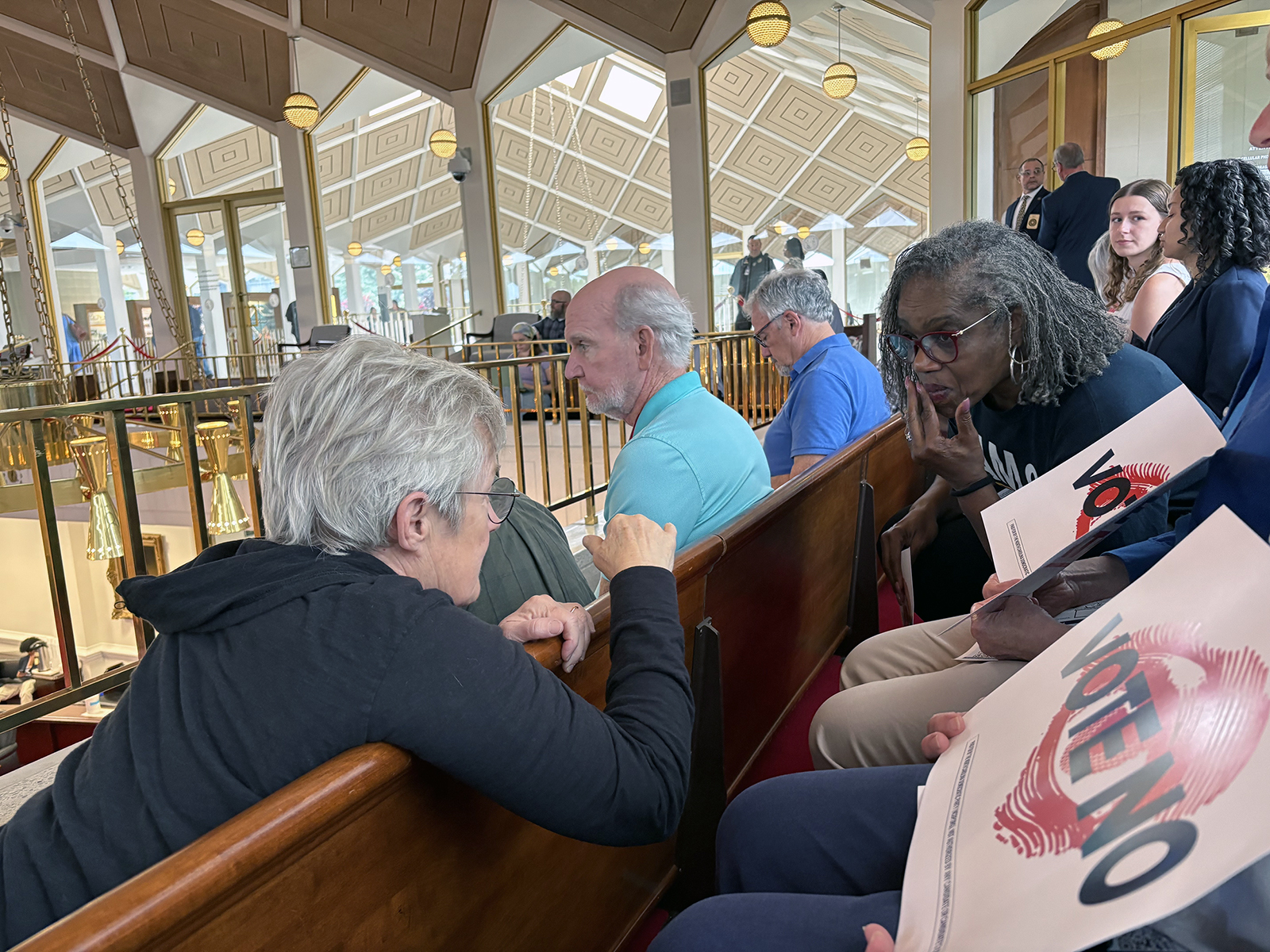
Two weeks ago, as the North Carolina Senate was about to vote on two election bills that would cut early voting days and gives the state’s Republican auditor unprecedented authority to scrutinize election results, four Democracy Out Loud activists began shouting in unison: “The people! United! Will never be defeated!”
Police officers guarding the General Assembly immediately ushered them out. Two minutes later, the Senate adopted the measure.
Later this month, Democracy Out Loud is joining other groups to plan a vigil in northeastern North Carolina to protest a new ICE detention facility that will open in a shuttered state prison.
The group has a never-ending list of causes. Activists are showing up at county commissioner meetings to push back against a new AI data center. They are assembling an election protection coalition ahead of the midterms. Some have found the time to write thank you letters to Anthony Fauci after a U.S. Senate committee held the nation’s former top health official in contempt.
Democracy Out Loud is part of Indivisible, a progressive grassroots political movement that has emerged across the country in the face of attacks on constitutional democracy. Although Indivisible aligns itself with the Democratic Party, Democracy Out Loud says it’s nonpartisan, though they mostly vote Democratic.
For Ziegler, a graduate of Union Theological Seminary who began her career as pastor of Metropolitan Community Church of New York in Greenwich Village ministering to gay men during the AIDS epidemic, activism is a way of life.
She came to North Carolina with her lifelong partner, now wife, Randa McNamara, to get an advanced nursing degree at Duke University. In 2017, after she retired, she and another activist began meeting at the federal courthouse in Raleigh every Tuesday to urge U.S. Sen. Thom Tillis (R-N.C.) to reject Trump’s cabinet appointments. The weekly protest turned into “Tuesdays with Tillis,” attracting 30 to 40 people each week.
When the COVID pandemic hit, the group shifted to online strategy sessions, and Democracy Out Loud was born.
The online Zoom meetings soon took on the form of a rally with its own rituals. They begin and end with a liberation song, typically led by Zieger’s wife, Randa. It might be a version of the Black spiritual “Woke Up This Morning With My Mind Stayed on Freedom,” John Lennon’s “Imagine,” Sam Cooke’s “Wonderful World,” or Willie Nelson’s “Vote ’em Out,” sung to new lyrics.
Each online rally concludes with a time-worn charge, borrowed from the Rev. William Barber’s “Moral Monday” campaigns.
“Forward together,” declares Ziegler.
“Not one step back,” a chorus of participants shouts back.
Over time, it became clear that the online rallies weren’t enough.
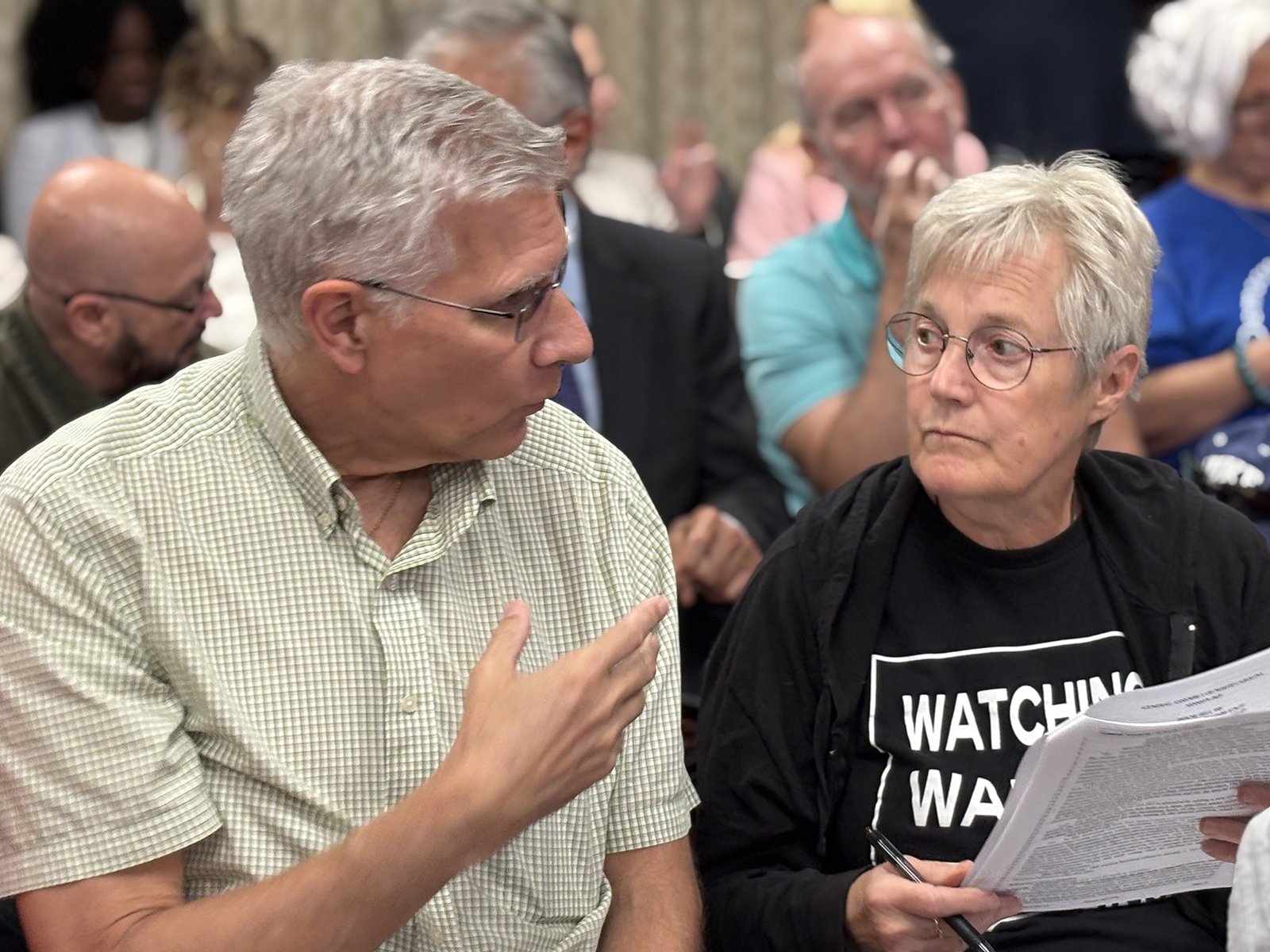
“A big part of creating a community used to be hugging each other,” said Jewel Wheeler, 73, who has served as the Zoom moderator, record keeper and organizational brain.
Once the group started meeting online, that wasn’t possible. Two years ago, Wheeler asked Ziegler if she would offer participants a guided meditation as a way to help.
Ziegler, who had been trained with Buddhist Lama Rod Owens, agreed.
Thursdays at 10 a.m., Ziegler leads the group in a meditation developed by Owens, called the Seven Homecomings. Like all Buddhist meditations, it encourages taking refuge in the Buddha, the Dharma (the teachings) and the Sangha (the community) but also in the earth and the ancestors.
Ziegler begins by encouraging people to share their personal challenges, including their grief, whether for a loved one or for the state of the world. Then she guides them through a meditation, pausing to pray for each person’s needs.
“The purpose of this practice is to get free of suffering,” she explained during a recent meditation. “We understand that resisting structures and systems of violence and disrupting them is one of the ways that we do that. That’s the outer healing. Then there’s the inner healing where we sit and dismantle all of that that’s within us, and then there is the secret healing, which is connected to the energy of the earth, to the energy of the ancestors and beings that are always helping us, and that’s what this practice is.”
Most of the participants do not identify as Buddhists, and many do not have a regular meditation practice. But they appreciate the time of contemplation.
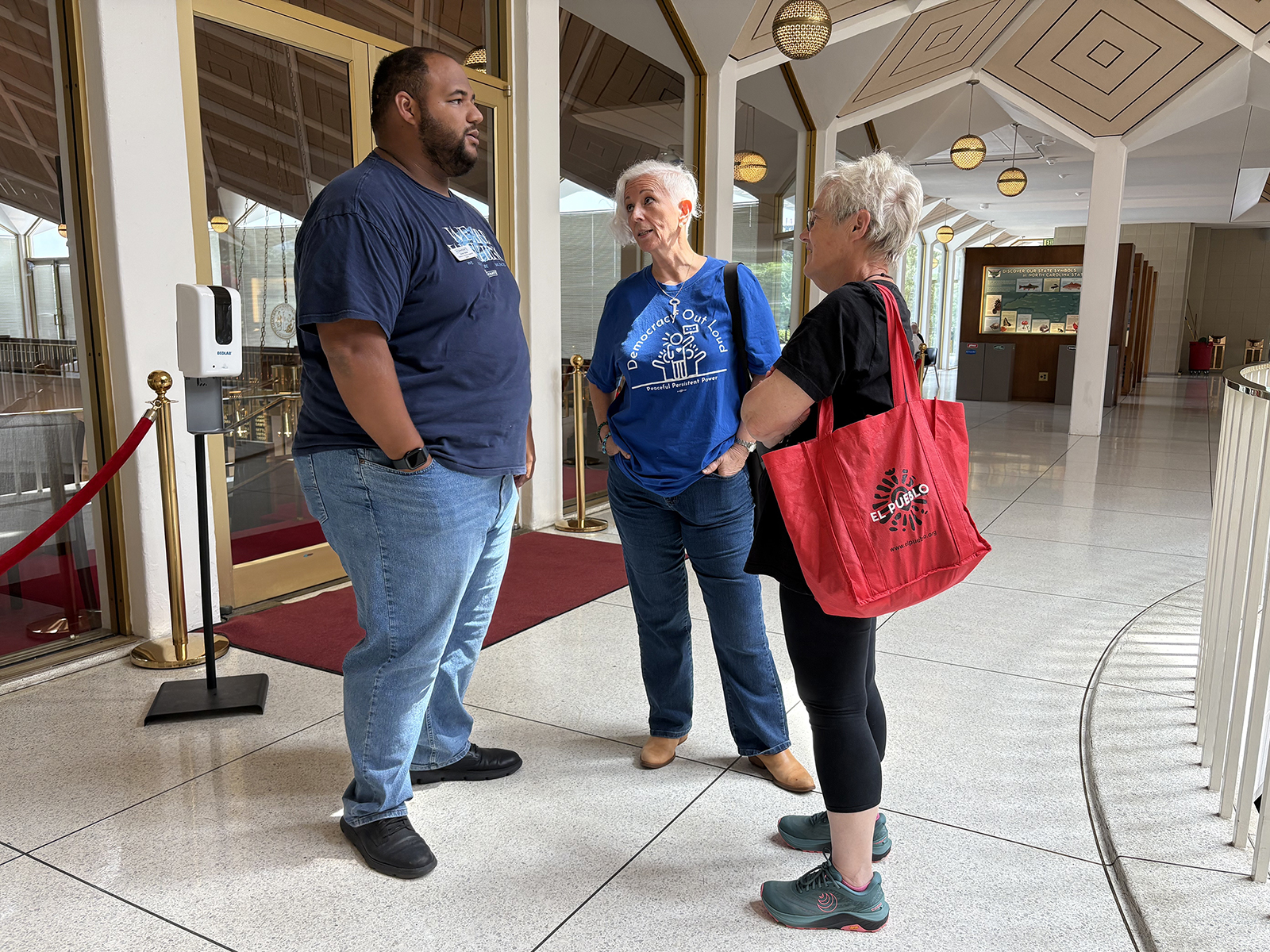
Elena Ceberio, who grew up Catholic and now attends a liberal Baptist church, is one of the most active and vocal protesters — a reliable presence at the General Assembly. She’s also a fan of meditation.
“You know, the kids say, ‘resistance is self-care,’ and I’m like, ‘Yeah, uh-huh, sure,’” said Ceberio, 66. “But it is, it really is, because if we don’t start there, then we all die, and the message goes with us.”
That message can be hard to face. In her recent Substack, Ziegler wrote, “ICE is becoming more ruthless, genocide continues, and fascism is becoming more evident.” But she also wrote that she believed a new day was dawning.
“This world is already here even as we struggle to give birth to it,” Ziegler wrote. “Let’s keep pushing.”
(This story was produced with funding from the Templeton Religion Trust.)